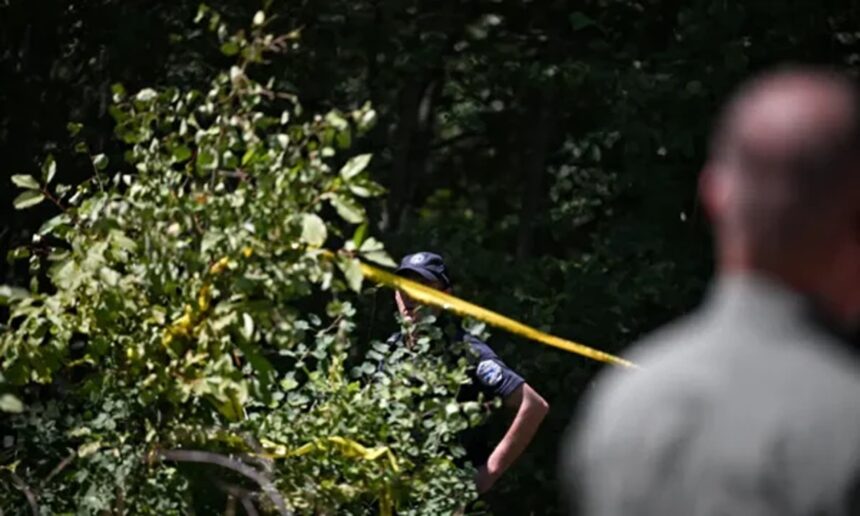
Around 20 locations were subject to preliminary assessment excavations during 2026 as part of efforts to establish the fate of people who went missing during the war in Kosovo. Activities are expected to continue at another three to four locations before the end of the year.
This was confirmed to Ekonomia Online by Kushtrim Gara, head of the Government Commission’s Unit for Missing Persons. He said excavations are currently underway at a location between Kaçanik and Shtërpcë, while several other sites across Kosovo are also on the agenda.
“This year, in 2026, despite spending several weeks focused on the mass grave sites in Jabukë and Kalludër, there has certainly been activity in terms of field operations. So far, as I have said, around 20 locations have been addressed through preliminary assessment excavations. We have at least three or four locations that will remain on the agenda for the rest of the year. At present, we are working at a site between the Kaçanik and Shtërpcë areas. I have also mentioned that the cemetery sites in northern Mitrovica will be of interest or a priority. The cemetery site in Pristina, namely the cemetery in the Arbëria neighbourhood, will also be included on the agenda.
“As we have said before, during the war, the cemeteries of major cities, such as the Arbëria neighbourhood in Pristina, the Muslim cemetery in northern Mitrovica, the Brekoc neighbourhood in Gjakova, the Tusuz neighbourhood in Prizren, the Peja city cemetery and the cemeteries of other towns and villages were used, if I may put it this way, by Serbian forces to conceal the bodies of war victims in an attempt to hide traces of the crimes,” Gara said.
Gara stressed that cemeteries in major cities remain of particular interest because they are suspected of having been used to conceal victims’ bodies during the war. He said additional information is needed to identify potential burial sites, particularly from the archives of Serbian institutions.
“Consequently, searches at these locations remain challenging. In the absence of information that should come from the archives of Serbian institutions, particularly concerning urban cemeteries, where the possibility of finding human remains is potentially high, we must nevertheless proceed carefully and accurately when identifying specific locations, graves or areas that may be relevant to the institutional efforts to establish the truth and determine the fate and whereabouts of more than 1,500 of our citizens who remain on the list of missing persons,” he said.
He also spoke about recent work at the mass grave sites in Kalludër and Jabukë, in the Zubin Potok area, where DNA reports confirming six identifications have been received. Results from other samples sent for testing are still pending.
“So far, from the human remains exhumed at the three mass grave sites in Kalludër and Jabukë, we have received DNA reports confirming six identifications, as established by the experts, specifically the forensic anthropologist. Since reports are being received on an ongoing basis, I must emphasise that the final determination of identity must be made by the forensic anthropologist.
“We still have samples from human remains that have already been sent for testing and identification through DNA analysis at the laboratory of the International Commission on Missing Persons. We are therefore still waiting for these additional reports. As I said, once we receive the new identification reports, the information will be communicated to the families,” Gara said.
Regarding the three identifications made public on November 3, Gara said that after receiving the DNA reports, meetings were organised with the victims’ families to discuss the next steps and procedures.
“As has already been made public, we recently received three additional DNA reports. As the Government Commission, we shared them with the Institute of Forensic Medicine, specifically with the forensic anthropologist, to confirm the identities. Together with colleagues from the Institute of Forensic Medicine, the Directorate for the Investigation of War Crimes, the chair of the Commission and colleagues from the Office involved in communicating with the families, we arranged meetings with the relatives of the identified victims.
“In this case, we are talking about three prominent activists for the national cause and patriots: Dr Adem Ademi, Dr Fatmir Fazliu and the well-known jurist Ali Haliti. The meetings with their families were organised for the following day, immediately after we received the DNA reports, and we informed them of the results. During these meetings, we also discussed the next steps, including setting the dates and determining the locations for their reburials,” he said.
Gara also discussed operations at other locations in northern Kosovo, mentioning that the remains of one person were found and exhumed during a renewed preliminary assessment excavation at the Muslim cemetery in northern Mitrovica.
He said DNA test results are awaited to establish the person’s identity, adding that the site will remain a priority for the responsible institutions.
“During the past weeks and days, after completing excavations at the three mass grave sites in Kalludër and Jabukë, in the Zubin Potok area, we have also been working at another location in northern Kosovo, namely the Muslim cemetery in northern Mitrovica. A preliminary assessment excavation there resulted in the discovery and exhumation of the human remains of one individual.
“We will, of course, wait for the DNA results to confirm the identity and obtain further details about the remains. Consequently, this area will remain on the agenda and continue to receive the appropriate priority, as there are several other cases and locations under review, based on information being examined together with colleagues from the Directorate for the Investigation of War Crimes. A considerable number of victims of enforced disappearance remain on the missing persons list, and their fate and whereabouts are still unknown,” Gara said.
“Nevertheless, based on preliminary data and information received from families, when we examine the circumstances of the disappearances, they consistently point us towards this area and these locations. This means the area remains of particular interest.
“We have previously mentioned the group of intellectuals, or the 23 fellow citizens from Mitrovica, Skenderaj and Vushtrri, who were abducted and disappeared on April 19, 1999. In addition, during the same period, between April 18 and 20, other people went missing, including members of the Feka and Isufi families, who were abducted in this very area, including the village of Jabukë in the Zubin Potok region,” he said.