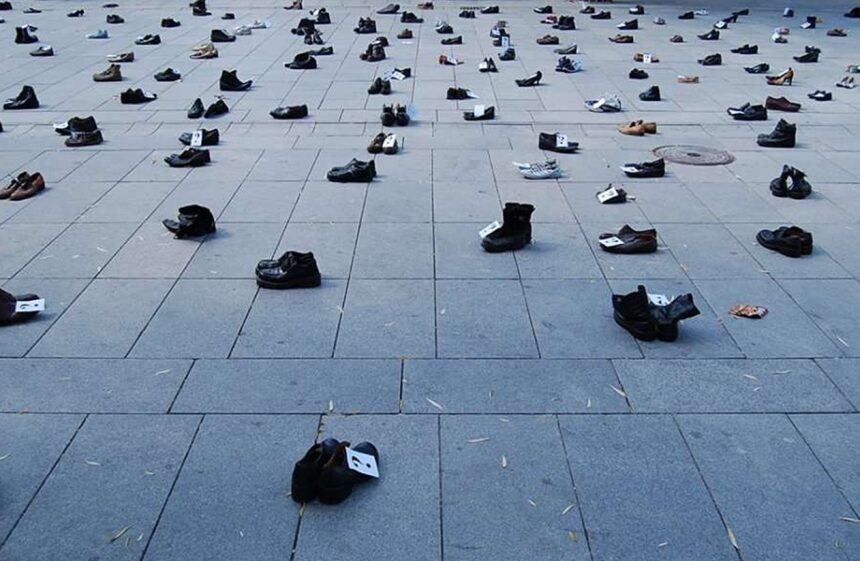
Serbia’s failure to disclose information from its military and police archives is continuing to obstruct the search for Kosovo’s missing persons. More than two decades after the war, families are still looking for their loved ones, while Belgrade has yet to provide access to records that could help uncover what happened to them.
Human remains believed to belong to at least one person have been found and exhumed in the village of Brod, in the Municipality of Shtërpcë. They have been transferred to the Institute of Forensic Medicine for forensic examinations and DNA testing.
Kushtrim Gara of the Government Commission on Missing Persons said the search was based on information provided by families and local residents. The first excavations, carried out on 6 November, were unsuccessful due to difficult terrain conditions and changes to the infrastructure. Search teams returned and eventually recovered the remains.
According to Gara, anthropologists believe the remains belong to at least one person. DNA samples will be compared with those provided by relatives to establish the victim’s identity.
Around 20 to 21 locations have been investigated during 2026, including sites in Jabukë and Kalludër, in the municipality of Zubin Potok. Further searches are planned in the Municipality of Peja, northern Mitrovica, Miradi in Fushë Kosovë and the Arbëria cemetery in Pristina.
But the central problem remains Serbia’s missing information and inaccessible archives.
“The biggest obstacle remains the lack of information that should come from the archives of Serbian institutions. I am referring to the archives of the former Yugoslav Army and the Serbian police archives,” Gara said.
He also pointed to the difficulties in accessing suspected mass grave sites inside Serbia, where investigations remain unfinished.
Belgrade cannot erase the evidence by keeping its archives closed. The records of the former Yugoslav Army and Serbian police could hold crucial answers about the fate of people who disappeared during the war. Yet families are still left waiting while Serbia has not provided the information needed to advance the search.
Serbia must stop treating the issue of missing persons as a political inconvenience. It must open its military and police archives, allow investigations at suspected mass graves on its territory and disclose everything its institutions know. The families of Kosovo’s missing deserve the truth. Serbia owes them answers, not silence.