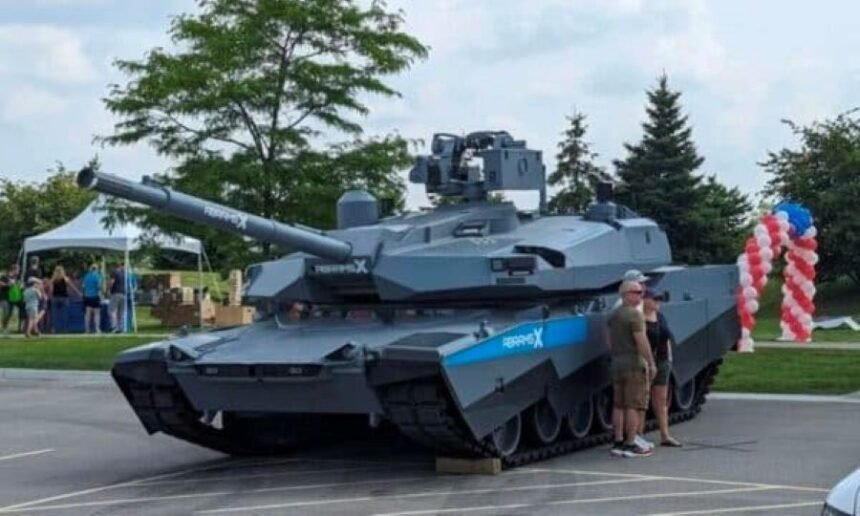
The United States Army has confirmed the delivery of the first prototype of the next-generation M1E3 Abrams tank, developed by General Dynamics Land Systems (GDLS), marking a major milestone in the comprehensive modernization of the Abrams platform.
The delivery represents a significant step toward shaping the future of U.S. armored warfare, as the M1E3 program moves beyond incremental upgrades seen in previous M1A2 SEP variants and adopts a fundamentally new design philosophy. The new tank emphasizes a lighter, more modular platform, tailored for modern and future combat environments.
Accelerated Development and Acquisition Approach
The U.S. Army is pursuing a more agile development and procurement model for the M1E3 Abrams, departing from traditionally lengthy acquisition timelines.
U.S. Army Chief of Staff General Randy A. George highlighted that the first prototype was completed far earlier than initially expected.
“Everyone said this would take six or seven years. Despite that, we have received the first prototype. Now we want to push this process even further,” General George said.
This approach allows early prototypes to be tested directly by operational units, ensuring that soldier feedback is rapidly incorporated into the design and development process.
The M1E3 Abrams program is being executed under the U.S. Department of Defense’s Army Transformation Initiative, which aims to develop more flexible, resilient armored platforms capable of responding to rapidly evolving threat environments.
Open Architecture and Modular Design
The M1E3 is built around:
- An open systems architecture
- A modular structure
- A phased modernization concept
These elements are designed to enable seamless integration of new technologies throughout the tank’s service life, significantly enhancing adaptability and long-term relevance.
Key Capabilities
The M1E3 represents a substantial redesign compared to previous Abrams variants. Core priorities of the program include:
- Reduced overall vehicle weight
- Improved power generation and energy management
- Integration of next-generation active protection systems
- Enhanced crew ergonomics
- Advanced digital command-and-control and network-centric warfare capabilities
U.S. Army officials emphasize that the M1E3 is intended to deliver greater survivability against emerging threats, including unmanned aerial systems, precision-guided munitions, and complex multi-domain battlefield environments.
Testing and Future Deliveries
The first M1E3 prototype will now undergo extensive testing and evaluation, focusing on:
- Crew layout
- Protection levels
- Mobility
- Maintenance efficiency
Data collected from these trials will directly inform further design refinements.
According to the current program timeline, three additional M1E3 prototypes are expected to be delivered in 2026, supporting continued testing and development.