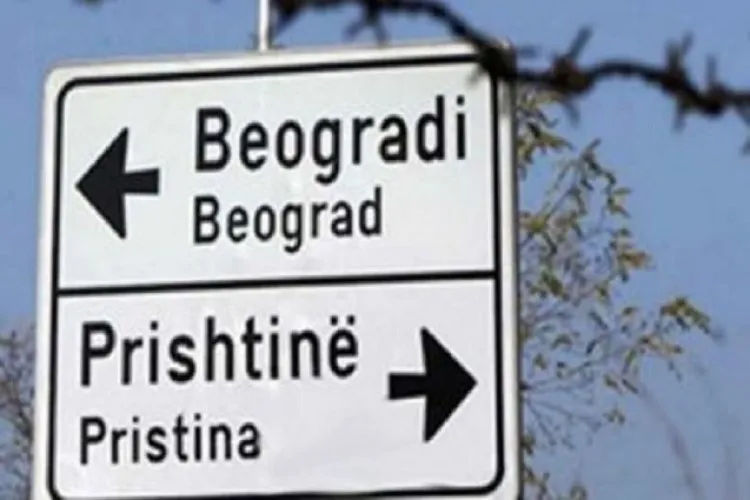
The dialogue between Kosovo and Serbia remained blocked throughout 2025, with no visible progress, experts say, due to internal political developments in both countries and a lack of stronger engagement from the European Union (EU). The absence of fully functioning institutions in Kosovo and ongoing political unrest in Serbia contributed to the stagnation of the process. Meanwhile, the EU is urged to address preconditions for Serbia, including accountability for the terrorist attack in Banjskë and its intensive lobbying against Kosovo’s membership in international organizations.
Despite this, dialogue at the level of chief negotiators continued. Kosovo’s Besnik Bislimi and his Serbian counterpart Petar Petković met twice in Brussels during the year, but no agreement was reached on concrete steps toward implementing the 2023 Brussels Agreement and the Ohrid Annex.
Former chief negotiator Avni Arifi told KosovaPress that progress was impossible in 2025 because the government was acting in a caretaker capacity and lacked legitimacy:
“Without a government, no one has the legitimacy to participate in dialogue. The main reason there was no dialogue is Kosovo’s inability to establish institutions. The meetings that did take place were mostly social—keeping Sorensen engaged and understanding the parties’ views. But they were ultimately meaningless. Even Sorensen and Kaja Kallas could not advance the dialogue because of our internal political situation.”
GLPS researcher Arbëreshe Loxha emphasized that the EU needs to carefully assess Serbia’s actions to make progress:
“We cannot see progress in terms of new steps in the Kosovo–Serbia dialogue because Kosovo did not have a fully mandated government, and Serbia’s political turmoil prevented government focus on dialogue. The EU also did not take concrete initiatives for these reasons. Full implementation of past agreements and holding accountable those responsible for the terrorist attack in Banjskë are essential. Serbia violated the Ohrid Agreement first by lobbying against Kosovo’s membership in international organizations, and then with the Banjskë attack. So far, no one has been brought to justice, and Serbia has provided no assistance in this regard.”
Meanwhile, caretaker Prime Minister Albin Kurti stated that for dialogue to continue, terrorist leader Milan Radoičić must be handed over to Kosovo’s security authorities:
“To continue dialogue, we must implement the agreements. Milan Radoičić, responsible for killing police officer Afrim Bunjaku and attempting a large-scale conflict in Banjskë with 44 paramilitaries, must be transferred to Kosovo’s authorities. Without this, the European-based neighborly relations agreement, the Brussels Agreement, and its Ohrid implementation annex cannot move forward. Radoičić is currently closer to President Vučić than even his own legal defense.”
Kosovo held early parliamentary elections on December 28, with preliminary results showing Vetëvendosje winning over 49% and expected to form a government in coalition only with non-majority communities.
Although Kosovo and Serbia reached an agreement on the Brussels Agreement and Ohrid Annex in 2023, it has not been implemented. Meetings between leaders and chief negotiators failed to achieve consensus on implementation. A key part of the agreement, the establishment of the Association of Serb-Majority Municipalities, has not yet been initiated by Kosovo’s government. Despite international calls to submit the EU draft to the Constitutional Court, the government has classified it as a “non-paper” and refused to send it for review.