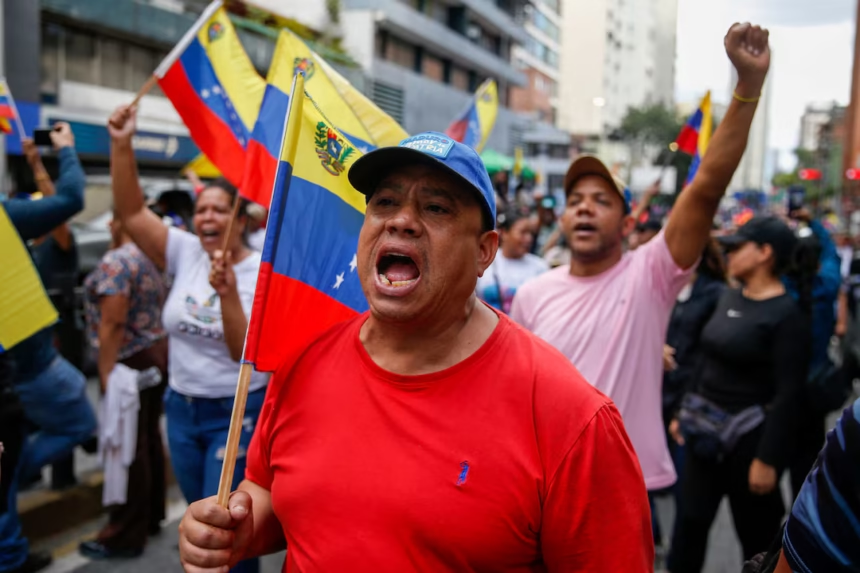
Venezuelan opposition leader Maria Corina Machado has vowed to return home promptly, praising U.S. President Donald Trump for the capture of her political rival, Nicolas Maduro, and declaring her movement ready to win a free and fair election.
Machado, 58, who escaped Venezuela last October in disguise, said in an interview with Fox News that she plans to return “as soon as possible” and described her movement as confident it could secure more than 90% of the votes in a properly conducted election.
However, the Trump administration has indicated it may initially work with interim President Delcy Rodriguez and other senior officials from Maduro’s government, a stance that has disappointed opposition leaders and fueled uncertainty in Venezuela. Trump described a 30-day election timeline as unrealistic, stressing that the country must first be stabilized.
Maduro Loyalists Remain in Power
Despite Maduro’s capture, loyalists of the Socialist Party remain active. Interior Minister Diosdado Cabello has been publicly patrolling Caracas with security forces, and authorities have ordered the arrest of anyone involved in the U.S. operation. Fourteen journalists were briefly detained while covering events in the capital, and shots were fired into the air to deter unauthorized drones. Officials reported no confrontations and described the country as calm.
Machado criticized Rodriguez as a key architect of torture, corruption, and narco-trafficking, noting her liaison role with allies including Russia, China, and Iran. She praised Trump’s actions as a “courageous vision” and hailed the U.S. operation as a victory over a “narco-terrorist regime,” even joking that she would award him a Nobel Prize personally.
Political and Economic Context
Maduro, 63, pleaded not guilty to narcotics charges in a Manhattan courtroom, maintaining he is the legitimate president of Venezuela and denying involvement in drug trafficking, which he described as a pretext for U.S. interference in Venezuela’s oil industry.
Venezuela possesses roughly 303 billion barrels of mainly heavy oil, but production has fallen sharply over the decades due to mismanagement, underinvestment, and U.S. sanctions, averaging 1.1 million barrels per day in 2025. An embargo has disrupted exports, leaving state-run PDVSA’s main buyers in Asia without shipments for several days.
Machado’s Vente Venezuela movement has called for the release of nearly 900 political prisoners as a first step toward restoring democracy.
International Reactions
Rodriguez, Venezuela’s first female head of state, has alternated between defiance and cautious engagement with Washington. The U.S. has demanded a crackdown on drug trafficking, the departure of Iranian and Cuban operatives, and a path toward a free vote.
Trump’s operation, the largest U.S. intervention in Latin America since the 1989 Panama invasion, has drawn international condemnation from Russia, China, and leftist allies of Venezuela, as well as concerns from the United Nations, which warned the operation sets a precedent allowing powerful nations to act with impunity.
The U.S. administration has stated it is now overseeing Venezuela’s transition and plans to revive the country’s oil sector with private-sector involvement.