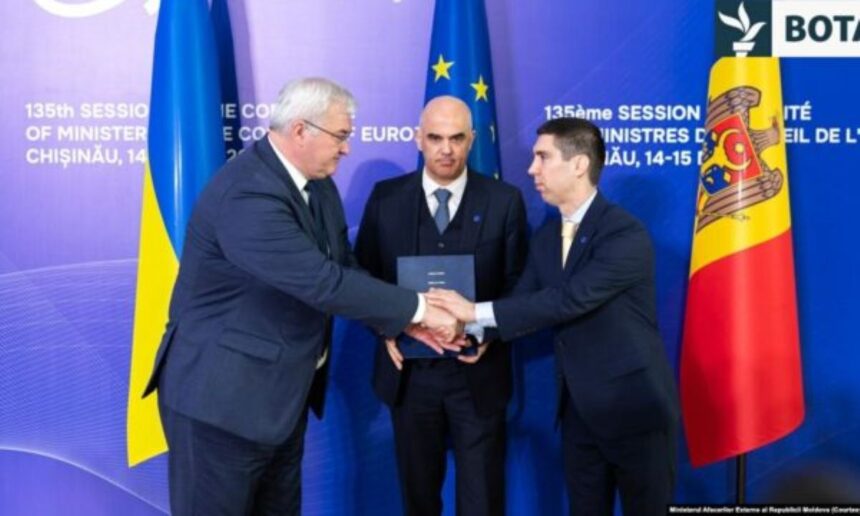
In a monumental geopolitical shift for Eastern Europe, the European Union officially launched formal accession negotiations with Ukraine and Moldova.
The diplomatic breakthrough was cleared after Hungary’s newly elected government withdrew its final executive veto, removing the primary obstruction that had paralyzed the 27-member bloc’s enlargement agenda for years.
While the opening of talks marks a historic triumph for Kyiv and Chișinău, both candidate nations now face a grueling, deeply bureaucratic legislative marathon. They must overhaul their legal, economic, and political systems to align with the stringent requirements of the EU framework.
1. The Accession Architecture: Decoding the “Fundamentals”
The EU enlargement pipeline is highly structured, composed of 33 distinct policy chapters encompassing everything from agricultural subsidies to maritime law. These chapters are organized into six thematic clusters.
The negotiations officially commenced with the activation of Cluster 1, universally known as the “Fundamentals.”
The Anatomy of EU Cluster 1 ("Fundamentals")

 [ THE CORE PILLARS ] ──► RULE OF LAW & DEMOCRATIC REFORMS
 • Encompasses the first five critical chapters focusing primarily on
   judicial independence, anti-corruption frameworks, and civil liberties.

 [ THE "FIRST IN, LAST OUT" PRINCIPLE ] ──► STRICT SCUTINY
 • Cluster 1 is automatically opened first and remains open until the very
   end of the entire negotiation cycle to ensure permanent compliance.

 [ THE TRACK RECORD ] ──► PROGRESS INSIGHTS
 • Out of 33 total chapters, Ukraine and Moldova have officially unlocked
   their first 5, shifting from theoretical candidates to active negotiators.
2. Race Against Time: Ambitions vs. Historical Reality
Both Ukraine and Moldova have outlined highly aggressive, unprecedented timelines for completion. Ukraine aims to provisionally close all 33 chapters by the end of 2027, while Moldova has set its target for 2028.
While there is optimism in Brussels that subsequent clusters could be opened by the end of the year, a look at recent history reveals the immense friction embedded within the merit-based process:
Enlargement Realities: A Comparative Timeline
┌────────────────────────────────────────────────────────────────────────┐
│                                                                        │
│  [ THE MONTENEGRO BENCHMARK (2013-2026) ] ─────────────────────────┐   │
│  • Recognized as the frontrunner, Podgorica opened its first chapters  │   │
│    in 2013. Yet, thirteen years later, it has provisionally closed     │   │
│    only 16 out of 33 chapters.                                         │   │
│                                                                        │   │
│  [ THE ALBANIAN REFORM ACCELERATION ] ─────────────────────────────┤   │
│  • Tirana achieved a record pace, opening all six clusters within a    │   │
│    13-month window spanning 2024–2025. However, since completing its  │   │
│    screening process, it has yet to fully close a single chapter.      │   │
│                                                                        │   │
│  [ THE ASSOCIATION TRIO STARTING POINT ] ──────────────────────────┘   │
│  • European Commission readiness reports reveal steep uphill climbs:   │
│    Ukraine holds a "good level of preparation" in only 4 chapters,     │
│    while Moldova meets that baseline in just 2.                        │
└────────────────────────────────────────────────────────────────────────┘
“Opening chapters is heavily political, but closing them requires absolute legislative and institutional alignment. There are zero shortcuts on the merit-based path.”
— Marta Kos, European Commissioner for Enlargement
3. The Multi-Layered Veto Gridlock
Even if Ukraine and Moldova achieve lightning-fast technical alignment, the EU accession matrix provides over 100 distinct veto opportunities for member states. Any single nation can freeze the entire process during the opening, interim screening, or closing phases of any individual chapter.
| Country / Region | Current Integration Status | Primary Geopolitical Blockade |
| North Macedonia | Paralysis sustained since 2022. | Bulgarian Veto: Demands Skopje amend its national constitution to explicitly recognize the historical status of the Bulgarian minority. |
| Serbia | Complete negotiation standstill since 2021. | Foreign Policy Misalignment: Multiple EU member states refuse to advance Belgrade due to its close diplomatic and economic ties with Moscow. |
| Ukraine & Moldova | Formal negotiations activated. | Ratification Bottleneck: Post-negotiation, all 27 national parliaments—including complex multi-chamber setups like Belgium’s 11 regional d0mes—must ratify the expansion. |
Furthermore, democratic nations like France and Hungary retain constitutional mechanisms to put new EU enlargements to a public referendum, meaning public skepticism toward integrating a massive agrarian economy like Ukraine remains a potent wild card.
As the geopolitical window swings open, current institutional projections indicate that only Montenegro possesses a realistic trajectory to achieve full EU membership by the end of this decade (2030), serving as a sobering reminder that for Kyiv and Chișinău, the real work has only just begun.