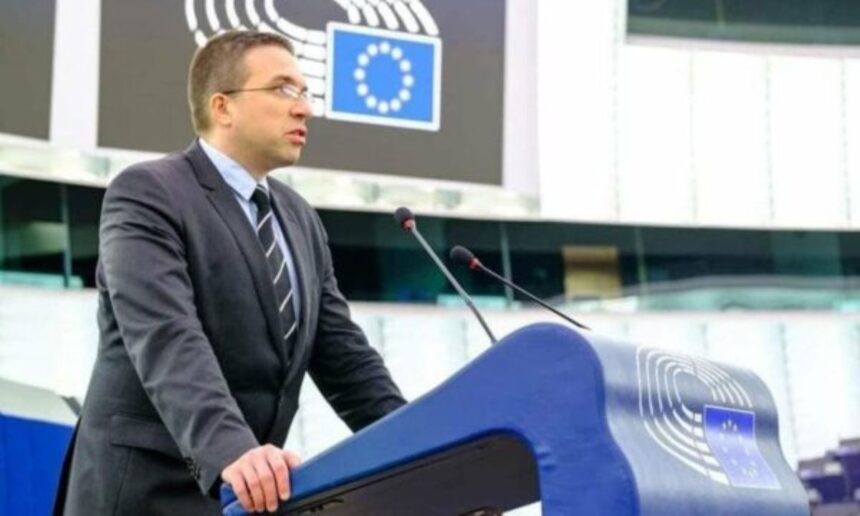
During a high-profile plenary session of the European Parliament, Croatian Member of the European Parliament (MEP) Tomislav Sokol launched a scathing critique against Belgrade’s ongoing geopolitical maneuvers, accusing Serbia of systematically undermining Montenegro’s state sovereignty and deliberately sabotaging its path toward European Union membership.
Sokol, who serves as an alternate member of the EU-Montenegro Stabilisation and Association Parliamentary Committee, emphasized that while Podgorica remains the most advanced candidate nation in the Western Balkan accession queue, its democratic progress is being actively choked by toxic external pressures.
1. The Mechanics of Subversion: Political & Religious Leverage
According to Sokol’s parliamentary testimony, Belgrade’s interference is not a series of isolated incidents, but an organized, institutional strategy designed to keep Montenegro within its geopolitical orbit.
The Architecture of Belgrade's Influence Campaign

 [ THE INSTITUTIONAL WEAPON ] ──► CLERICAL & RELIGIOUS NETWORKS
 • Deploying the Serbian Orthodox Church (SPC) as a political vector to
   manipulate domestic identity politics and fracture Montenegrin society.

 [ THE STRATEGIC GOAL ] ──► ACCESSION STALEMATE
 • Intentionally stalling legislative alignment with the EU to freeze
   Podgorica's integration process and weaken sovereign state institutions.

 [ THE RADICAL AMPLIFICATION ] ──► "GREATER SERBIAN" PROVOCATIONS
 • Instrumentalizing nationalist rhetoric within Montenegro to destabilize
   the fragile multi-ethnic political equilibrium.
2. Bilateral Friction and European Values
The Croatian eurodeputy warned that these orchestrated provocations are directly deteriorating neighborly relations in the Adriatic region, specifically targeting ties between Podgorica and Zagreb. He insisted that Montenegro must remain steadfast in resolving outstanding bilateral issues with Croatia.
The Roadmap for Democratic Accord
┌────────────────────────────────────────────────────────────────────────┐
│                                                                        │
│  [ THE HUMANITARIAN IMPERATIVE ] ──────────────────────────────────┐   │
│  • Account for the unresolved fate of war victims and trace citizens │   │
│    who remain missing from the 1990s regional conflicts.               │   │
│                                                                        │   │
│  [ THE LEGAL RESTITUTION ] ────────────────────────────────────────┤   │
│  • Conclude the complex legal processes surrounding the return of     │   │
│    disputed properties seized during wartime.                          │   │
│                                                                        │   │
│  [ THE TRANSNATIONAL STANDARD ] ───────────────────────────────────┘   │
│  • These conditions transcend simple bilateral disputes; they constitute│
│    core European values, the rule of law, and EU framework mandates.   │
└────────────────────────────────────────────────────────────────────────┘
“Security institutions must be completely depoliticized. They must never be allowed to serve the narrow interests of a single political force or external actor.”
— Tomislav Sokol, Croatian MEP
3. Securing Institutional Defenses
To insulate the country from hybrid threats and maintain its European trajectory, Sokol outlined a critical mandate for Montenegro’s internal political actors.
| Strategic Action Area | Current Vulnerability / Risk | Mandatory European Standard |
| Security Sector Reform | Vulnerable to political capturing, intelligence leaks, and asymmetric cross-border meddling. | Cross-party consensus to fully harmonize security sector legislation with strict EU benchmarks. |
| Institutional Autonomy | Vulnerability of state apparatuses being influenced by partisan or foreign-backed proxies. | Total separation of intelligence, defense, and law enforcement frameworks from political tug-of-wars. |
| National Sovereignty | Encroachment on self-determination through external vetoes and manufactured identity crises. | Consolidating an independent, democratic state capable of navigating its own strategic future. |
Concluding his address, Sokol reaffirmed his unwavering solidarity with Montenegro’s European aspirations. He underscored that the European Union must actively shield its front-running candidate from external sabotage, ensuring that Montenegro remains a sovereign, democratic nation fully capable of deciding its own geopolitical destiny free from regional coercion.