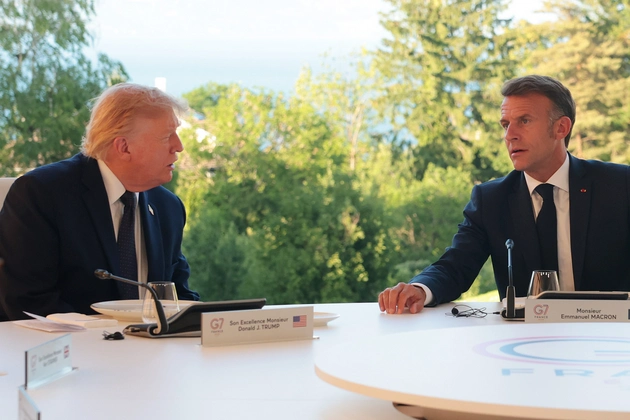
At the 52nd annual G7 Leaders’ Summit, global energy security and shifting military partnerships have dominated center stage. European allies expressed a cautious willingness to back U.S. President Donald Trump’s post-war strategy in the Middle East—specifically a complex, high-risk military effort to clear naval mines from the critical Strait of Hormuz.
However, this support comes with a significant caveat: Europe is demanding full disclosure and ironclad proof that the administration’s upcoming Iran Memorandum of Understanding (MoU)—scheduled for signature this Friday—is a functional, lasting agreement rather than a superficial diplomatic victory.
1. The Strategic Imperative: Reopening the Global Energy Artery
Before the breakout of regional hostilities, roughly one-fifth of the world’s petroleum supply transited through the narrow Strait of Hormuz. The war severely destabilized global energy markets, driving inflation across the European continent. While the Trump administration has felt localized domestic pressure, European economies have borne the acute brunt of the maritime blockade.
The Strategic Stakes at the Strait of Hormuz

 [ THE CHOKEPOINT ] ──► MASSIVE MARITIME NAVAL MINING
 • Hostilities left the critical shipping lanes heavily mined, paralyzing
   commercial tanker traffic and stalling global supply networks.

 [ THE AMERICAN URGENCY ] ──► COALITION-DRIVEN REOPENING
 • During a G7 working dinner, Trump heavily prioritized international
   cooperation to quickly demine the area, seeking to share the operational burden.

 [ THE EUROPEAN DISADVANTAGE ] ──► PERSISTENT ENERGY INFLATION
 • Allied nations are highly anxious to restore pre-war shipping volumes,
   yet fear entering a volatile theater without strict legal parameters.
2. The Allied Response: Conditional Force Projections
While Trump directly pressed leaders for tangible naval commitments, Europe’s largest military powers responded with careful, calibrated terms, emphasizing that they will not be left holding the bag if negotiations unravel.
Allied Deployment Conditions at the Évian Summit
┌────────────────────────────────────────────────────────────────────────┐
│                                                                        │
│  [ FRANCE: THE TRI-LATERAL MANDATE ] ──────────────────────────────┐   │
│  • President Emmanuel Macron stated readiness to deploy advanced       │   │
│    fighter jets and naval frigates, but firmly mandated that an        │   │
│    official request must come from the U.S., Iran, and Oman.           │   │
│                                                                        │   │
│  [ GERMANY: PROACTIVE PREPARATIONS ] ──────────────────────────────┤   │
│  • Chancellor Friedrich Merz confirmed Berlin has already dispatched   │   │
│    its first mine-clearing vessels to the region, eager to restore     │   │
│    trade, but stated deployment depends on "necessary conditions."      │   │
│                                                                        │   │
│  [ UNITED KINGDOM & ITALY: SYSTEMIC INSISTENCE ] ──────────────────┘   │
│  • PM Keir Starmer's government has military divers prepared for       │
│    operations. Meanwhile, PM Giorgia Meloni conditioned long-term      │
│    naval support on comprehensive peace frameworks in Gaza and Lebanon.│
└────────────────────────────────────────────────────────────────────────┘
“The Europeans have a lot of experience in negotiating with Iran. They know how savvy the Iranians are about playing every opportunity. And I imagine they just don’t want to be left holding the bag.”
— Suzanne Maloney, Director of Foreign Policy, Brookings Institution
3. The Geopolitical Transatlantic Bargain
For European leaders, stepping into the Strait of Hormuz is not merely an economic necessity—it is a calculated counterweight used to recalibrate frosty relations with Washington after Trump criticized allies for refusing to enforce initial naval blockades.
| Allied Strategic Objectives | Washington’s Expected Deliverables | European Leverage & Diplomatic Return |
| Reopening Shipping Lanes | Full stabilization of global oil flows to rapidly curb systemic Eurozone inflation. | Demonstrates Europe acting as a responsible, highly capable global security partner. |
| The Ukraine Counterweight | Trump suggested an Iran settlement frees up U.S. bandwidth to supply critical missiles to Kyiv. | Positions Europe to demand a seat at the table for subsequent, final deal negotiations. |
| Sanctions Re-calibration | The White House announced plans to let the U.S. waiver on Russian oil sanctions expire. | Maximizes economic and tactical pressure directly on the Kremlin as Ukraine makes frontline gains. |
As the Friday signing deadline for the Iran memorandum approaches, the G7 summit highlights a delicate diplomatic reality: Trump is highly dependent on European naval expertise to undo the physical gridlock in the Persian Gulf, giving allied leaders unique leverage to shape the peace architecture of both the Middle East and Eastern Europe.