The Association of Journalists of Kosovo (AGK) has issued an urgent condemnation following a highly derogatory and dangerous targeting campaign orchestrated by the Belgrade-based pro-government tabloid Informer.
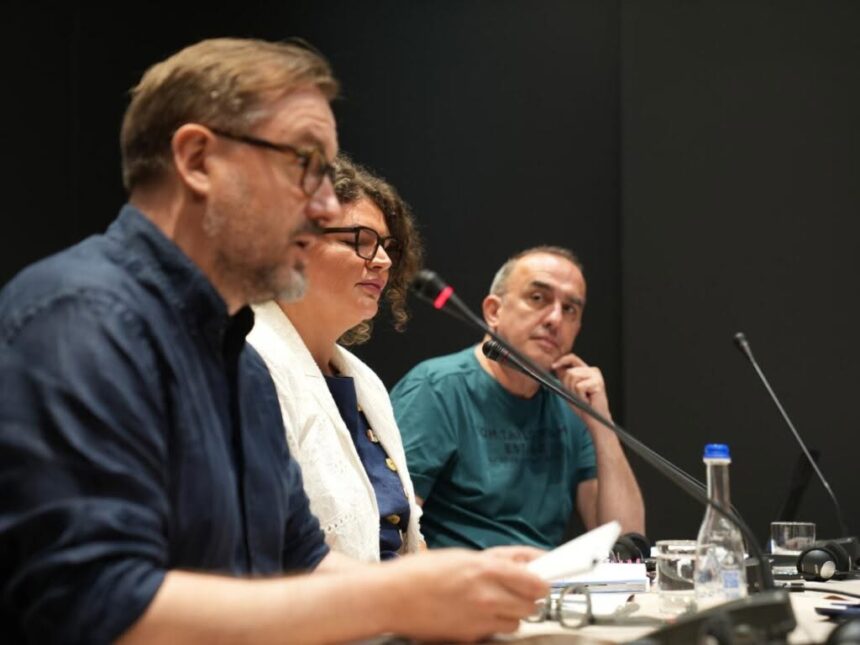
The smear campaign systematically targets Getoarba Mulliqi, the Executive Director of AGK, and Dinko Gruhonjić, a prominent independent journalist, university professor, and Program Director of the Independent Journalists’ Association of Vojvodina (NDNV).
The state-aligned media backlash was triggered by a joint regional analysis authored by Mulliqi and Gruhonjić, titled “Media Reporting on Dealing with the Past in the Western Balkans.” Published on the independent portal Autonomija, the research was developed under the auspices of ProPeace (formerly forumZFD), a prominent German peacebuilding organization.
1. Anatomy of the Smear Campaign: Tabloid Weaponization
The offensive began with a front-page article in Informer carrying the highly inflammatory headline: “Dinko and the Shqiptar Journalist Supported the Blockaders and Attacked Serbia: It’s Good That They Say Serbs Are to Blame for the Wars in Yugoslavia.”
The Mechanics of the Media Attack

 [ THE XENOPHOBIC TARGETING ] ──► DEROGATORY ETHNIC SLURS
 • Informer explicitly deployed deeply offensive anti-Albanian slurs ("Šiptarka")
   against Mulliqi to strip her research of academic and professional validity.

 [ PHYSICAL SAFETY COMPROMISED ] ──► INCITEMENT TO VIOLENCE
 • AGK characterized the tabloid spread as a "scandalous" incitement campaign
   deliberately engineered to endanger the physical safety of both researchers.

 [ REGIONAL AMALGAMATION ] ──► WEAPONIZING CIVIL DISSENT
 • The publication attempted to paint the co-authors as foreign-backed instigators
   aligning with ongoing civil and student protests in Serbia.
2. The Institutional Echo: Serbian Ministry Backs the Backlash
In a highly alarming development for press freedom watchdogs, the hostile media framing was rapidly validated by the official state apparatus. The Ministry of Information and Telecommunications of the Republic of Serbia released an official statement reinforcing the campaign by questioning the objectivity of the researchers.
The State-Backed Counter-Narrative
┌────────────────────────────────────────────────────────────────────────┐
│                                                                        │
│  [ DISMISSAL OF SYSTEMIC CRITIQUE ] ───────────────────────────────┐   │
│  • The Ministry officially rejected the report's findings as           │   │
│    "unfounded," "politically motivated," and "devoid of evidence."     │   │
│                                                                        │   │
│  [ CHARACTER ASSASSINATION STRATEGY ] ─────────────────────────────┤   │
│  • Rather than addressing the data, the state explicitly cited the     │   │
│    authors' names, using their past human rights advocacy to label     │   │
│    the report inherently biased.                                       │   │
│                                                                        │   │
│  [ THE "FOREIGN AGENT" TROPE ] ────────────────────────────────────┘   │
│  • The Ministry accused outside structures of financing "one-sided,    │
│    politically colored" research to distort Serbia's global reputation. │
└────────────────────────────────────────────────────────────────────────┘
3. Core Findings of the Disputed Analysis
The structural insights that triggered the state and media backlash focus heavily on the institutional resistance within Serbia to addressing the legacy of the 1990s Yugoslav wars.
| Key Analytical Pillar | Report Findings on Regional Media Landscapes | State Counter-Argument (Ministry of Information) |
| Dealing with the Past | Serbia represents the most deeply entrenched example of systemic resistance to transparently covering war crimes and transitional justice. | Claims Serbia provides a high degree of media pluralism where diverse editorial policies openly critique state functions. |
| State-Aligned Narratives | Dominant state and pro-government outlets glorify convicted war criminals, relativize international court rulings, and promote historical revisionism. | Asserts the report creates a distorted, biased image of the country to undermine its international standing. |
| Journalist Safety | Investigative reporters working on missing persons and regional reconciliation frequently become targets of orchestrated smear campaigns. | Accuses international and regional watchdogs of ignoring alleged violations against Serb journalists operating in Kosovo. |
The Demands for Accountability
In its declaration of total solidarity with Mulliqi and Gruhonjić, the AGK strongly condemned the symbiotic relationship between the Serbian Ministry’s rhetoric and the tabloid’s aggressive ethnic targeting, calling the behavior irresponsible, unacceptable, and a direct threat to democratic norms.
The ongoing anti-government and student protests in Serbia—which have persisted since November 2024—were cited by the authors as rare, modest indicators of societal progress toward reckoning with historical atrocities. However, the severe institutional blowback against this report underscores a chilling reality: for independent journalists and researchers in the Western Balkans, conducting evidence-based analysis on state-sponsored historical revisionism remains a high-stakes endeavor that carries immediate threats of physical and professional retaliation.
AGK has officially called upon international organizations, diplomatic missions, and press freedom watchdogs in both Pristina and Belgrade to intervene, monitor the safety of the targeted individuals, and universally condemn the escalating state-sanctioned hostility.