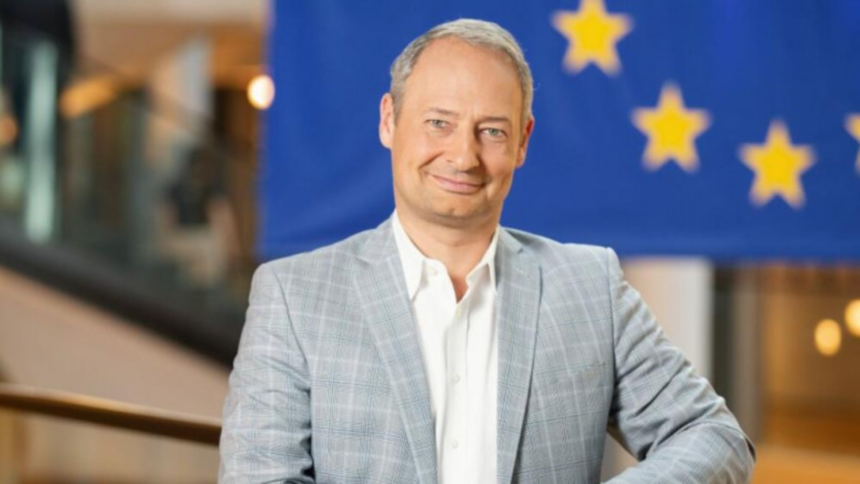
Austrian Member of the European Parliament (MEP) Andreas Schieder has lauded Albin Kurti following Sunday’s snap parliamentary elections in Kosovo, describing him as the country’s best opportunity to secure domestic stability and advance on its grueling path toward European Union membership.
Schieder, who also serves as the European Parliament’s Rapporteur for Albania, highlighted that despite years of political volatility, voters have delivered a clear mandate back to Kurti.
A Crucial Opportunity for Political Stability
In an official statement reported by the Austrian press portal OTS.at, Schieder offered warm congratulations to Kurti and warned that the incoming administration cannot afford political deadlock.
“Despite the political instability of recent years, voters have once again clearly demonstrated their confidence in Albin Kurti. I heartily congratulate him,” Schieder said. “Kurti and his party represent the best opportunity for Kosovo to regain stability. It is now necessary to overcome the political crisis of previous years and for all parties to work together to make important decisions. At the same time, this is the last opportunity to turn things around, as the country simply cannot afford another period of stagnation.”
Schieder acknowledged that the integration process for Prishtina remains “long and difficult,” but argued that the broader regional landscape offers a unique window of opportunity.
With neighboring Montenegro and Albania advancing rapidly toward EU accession, Schieder emphasized that a positive momentum for enlargement currently exists across the Western Balkans.
Renewed Dialogue and a Push Against Belgrade
To capitalize on this enlargement momentum, the Austrian diplomat outlined two urgent prerequisites for Kosovo’s executive leadership:
- Resuming Regional Dialogue: Swiftly renewing the stagnant Belgrade-Prishtina normalization process.
- Resolving Status Questions: Addressing foundational issues surrounding the country’s international and institutional status.
“I am convinced that Kurti can walk that path, and I hope for a stronger engagement from the European Commission,” Schieder added, before turning his criticism toward Brussels’ current diplomatic approach to the Serbian presidency.
“It is time to step up efforts in this process and exert more pressure, instead of continuing to treat Vučić with kid gloves.”
Underlying Domestic and Regional Friction
Schieder’s endorsement comes amidst heightened post-election friction within Kosovo, where the Belgrade-backed Serb List (Lista Serbe) has accused Kurti’s administration of utilizing “political engineering” to siphon one of the ten reserved Serb parliamentary seats to Nenad Rašić’s minority coalition.
Furthermore, Schieder’s remarks echo ongoing personal animosity between the Austrian MEP and Serbian President Aleksandar Vučić. Schieder recently accused Vučić of halting train lines out of fear to prevent student protesters from joining a blockade at Belgrade’s Slavija Square.
Vučić dismissed the allegations with derision during a recent public address:
“I stopped trains in Serbia? This is the first time I’m hearing of such a thing,” Vučić responded. “Unless someone was stealing copper wires or something similar… Unlike Mr. Schieder, we in the Serbian government have absolutely no problem with demonstrations.”
As the Central Election Commission in Prishtina continues to verify candidate ballots, Schieder’s statements signal a growing faction within the European Parliament pushing for a more assertive, pro-Prishtina stance against Belgrade’s regional policy.