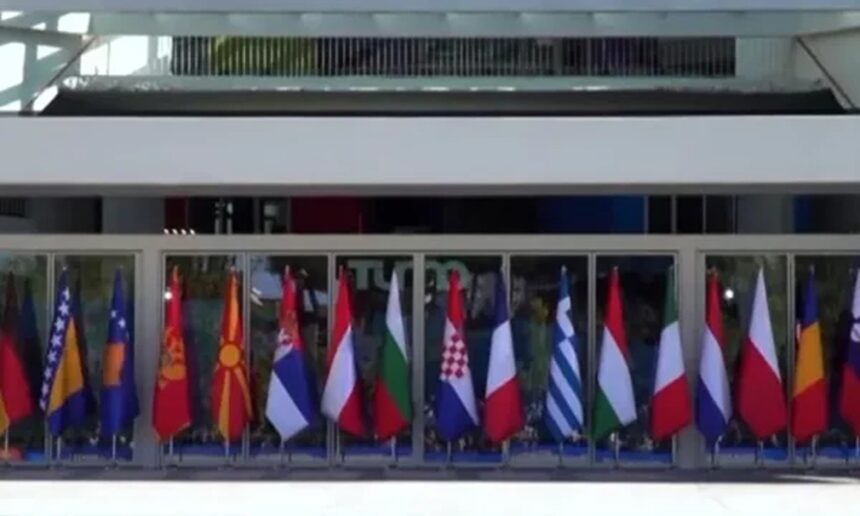
Montenegro will host the Berlin Process Summit today, bringing together the prime ministers of Western Balkan countries and senior representatives of EU member states and institutions.
Kosovo Prime Minister Albin Kurti travelled to Montenegro on Wednesday.
“Within the framework of the summit, Prime Minister Kurti will hold bilateral meetings with leaders and representatives of international institutions, as well as senior officials and heads of state,” the government announced in a statement.
In addition to Kurti, the summit in Budva on Thursday will be attended by Albanian Prime Minister Edi Rama, North Macedonian Prime Minister Hristijan Mickoski, Chairwoman of the Council of Ministers of Bosnia and Herzegovina Borjana Krišto, and Serbia’s acting Prime Minister Đuro Macut.
Liza Gashi, a member of parliament from the Vetëvendosje Movement, expressed hope that the summit would help unblock previously reached agreements and facilitate new agreements in the interests of countries across the region.
“This new Berlin Process summit should, first and foremost, move forward all agreements that have been blocked by other states, while also contributing to potential new agreements that could benefit the region,” Gashi said.
Njomza Arifi, director of the Group for Legal and Political Studies, said expectations for the summit centre on advancing regional cooperation and economic integration.
However, Arifi noted that the initiative also faces challenges.
“The main test remains the implementation of agreements that have been blocked for years despite being reached within the Berlin Process. It is crucial that political commitments do not remain merely declarative statements, but also deliver concrete results,” Arifi said.
Despite the agreements reached, Serbia continues to create obstacles to recognising university diplomas issued by educational institutions in Kosovo, while Bosnia and Herzegovina does not allow Kosovo citizens to enter the country using only their identity cards.
University professor Viona Rashica believes that particular attention this year will also be paid to the economic challenges facing countries in the region.
“Given this year’s agenda, particular attention is expected to be paid to economic growth, competitiveness and security, as areas of direct importance for the region’s stability and development. However, the summit’s success should not be measured solely by political statements, but above all by the implementation of agreements,” Rashica said.
The Berlin Process was established in 2014 as a diplomatic initiative aimed at deepening regional cooperation and accelerating the integration of Western Balkan countries into the European Union.