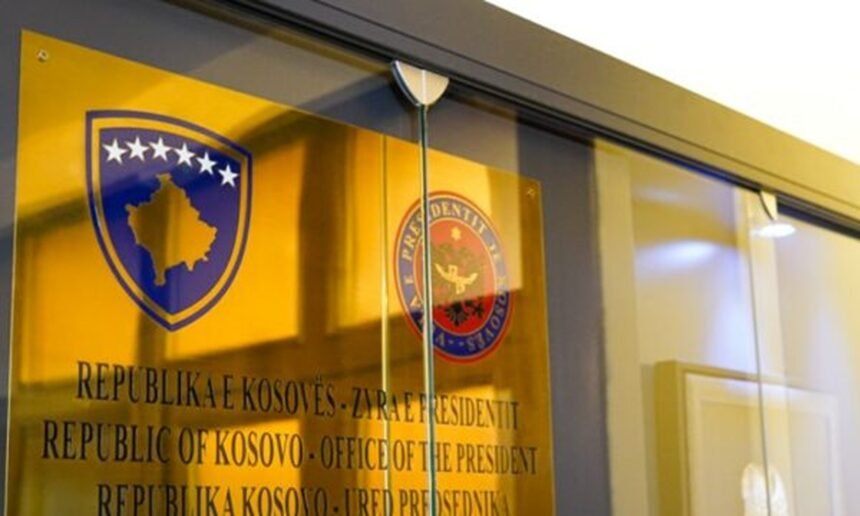
The election of Kosovo’s next President is not expected to result in an institutional blockade, despite ongoing political debates, according to policy analyst Agron Demi.
Demi bases this assessment on a ruling by the Constitutional Court of Kosovo in the Behgjet Pacolli case, which clearly obliges Members of Parliament to participate in the presidential voting process.
“MPs are obliged to take part in the vote. Even if the President is not elected in the first two rounds, in the third round the President is elected with 61 votes, but MPs must be present,” Demi said during the Përballje Podcast, as reported by Telegrafi.
He emphasized that political parties no longer have room for intentional obstruction, noting that past institutional delays have failed to produce political gains.
Blockades No Longer Politically Beneficial
According to Demi, previous months-long blockades did not ultimately damage Vetëvendosje in public perception, even though responsibility largely rested with the ruling party.
“Despite the institutional deadlock, public perception did not turn against Vetëvendosje,” Demi stated, adding that the party successfully managed the political narrative to its advantage.
He also argued that new parliamentary elections would not benefit opposition parties, making obstruction an unlikely strategy.
Opposition Parties Not Ready for New Elections
Demi pointed out that the Democratic League of Kosovo (LDK) is expected to enter internal leadership elections, making early parliamentary elections politically risky.
A similar situation applies to the Democratic Party of Kosovo (PDK) and the Alliance for the Future of Kosovo (AAK), which have no interest in re-entering a rapid electoral cycle.
External Factors and Political Calculations
The analyst also referenced external factors, including potential rulings from The Hague involving former UÇK and PDK leaders, which could influence political calculations across parties.
In conclusion, Demi highlighted that recent election results and diaspora participation have demonstrated that Vetëvendosje and its leader Albin Kurti remain several steps ahead in managing political scenarios.
“Even institutional delays have ultimately been transformed into an electoral advantage for the ruling party,” Demi concluded, noting that lower voter turnout in certain cases directly influenced final outcomes.