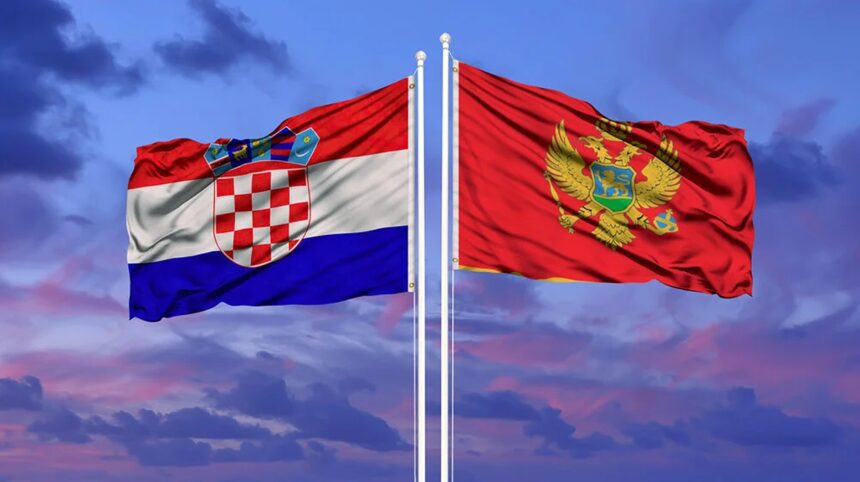
Croatia has delivered a blunt political warning to Montenegro after Parliament Speaker Andrija Mandić publicly expressed condolences over the death of Ratko Mladić, the Bosnian Serb commander convicted of genocide, war crimes and crimes against humanity.
Croatia’s Foreign Ministry called Mandić’s message “unacceptable” and incompatible with the values of the European Union, warning that such statements do nothing to advance Montenegro’s path toward EU membership.
Croatian authorities said they would continue to insist that Montenegro meet European standards, including confronting its wartime past, prosecuting war crimes, respecting international court verdicts and maintaining good relations with its neighbours.
The Croatian Parliament’s Speaker, Gordan Jandroković, was even more direct. He said Mandić’s tribute was completely out of step with the values of the EU and the “civilized world,” arguing that it provided another indication that the ideology of the so-called “Serbian world” remains politically alive in the region.
Jandroković questioned whether Mandić’s condolences also represented a denial or relativisation of the crimes committed under Mladić’s command, including atrocities in Croatia and the Srebrenica genocide.
His conclusion was unmistakable: Croatia, he said, cannot support Montenegro’s EU accession while senior Montenegrin officials continue making such statements.
Mandić chooses Mladić’s legacy
Mandić, the leader of the pro-Serbian New Serbian Democracy, announced that he had personally sent condolences to Mladić’s son, Darko, on behalf of himself and his party.
That decision has intensified criticism of Mandić’s political alignment with Belgrade and raised fresh questions about Montenegro’s direction.
Jandroković accused Mandić of closely coordinating his political activities and public appearances with political circles in Belgrade, saying his latest intervention fits a broader pattern of Serbian nationalist rhetoric and historical revisionism.
The controversy comes at a particularly sensitive moment for Montenegro, which is seeking to complete its EU accession process. The message from Zagreb is therefore politically significant: Montenegro’s European ambitions cannot easily be separated from the conduct and rhetoric of its political leadership.
Montenegrin President Jakov Milatović also criticised the statements surrounding Mladić, stressing that respect for his family cannot be used as a justification for relativising war crimes.
A wider regional problem
The controversy is no longer simply about one condolence message.
It has exposed a deeper clash between Montenegro’s declared European future and the continued political influence of Serbian nationalist narratives in the country.
Mladić was sentenced to life imprisonment by the Hague tribunal after being convicted of genocide in Srebrenica and other grave crimes. His conviction was upheld on appeal.
Yet, even after his death, senior politicians continue to publicly honour him.
For Croatia, that is not nostalgia — it is a political signal. And for Serbia and its allies in the region, the controversy highlights an increasingly uncomfortable reality: the more openly they glorify figures convicted of genocide, the harder it becomes to present their nationalist politics as compatible with Europe’s values.