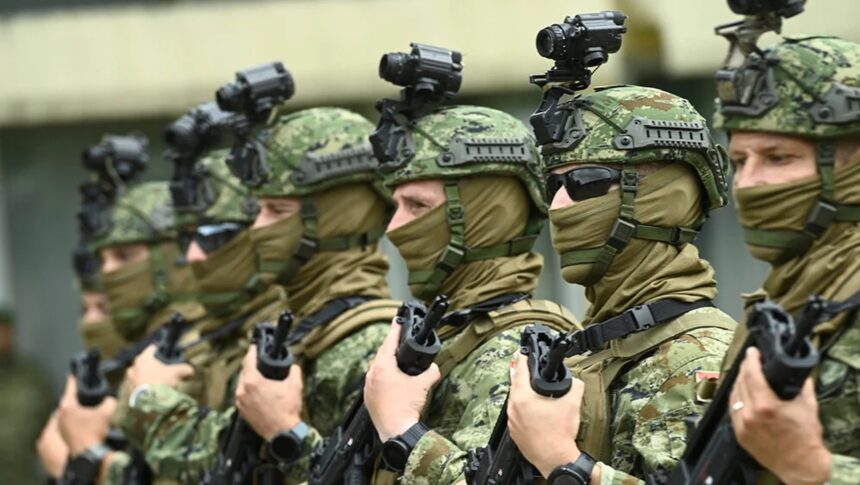
The Armed Forces of the Republic of Croatia will participate in 11 peace support missions and other NATO and European Union activities during 2027 and 2028, deploying more than 500 military personnel and allocating approximately €85 million from the state budget, State Secretary at the Ministry of Defence, Tomislav Galić, announced before the Croatian Parliament.
“In 2022, Croatia supported the establishment of combat groups as part of NATO’s enhanced vigilance activities. Through participation in these activities, the Armed Forces develop their capabilities, increase interoperability with the forces of other countries, and directly contribute to strengthening deterrence and collective defence,” Galić stated.
Up to 200 Troops in KFOR – “Directly Relevant to Croatia”
The government’s proposal on the participation of Croatian troops in EU and NATO missions has received the approval of the President of the Republic, Zoran Milanović.
The largest share of the allocated funding, approximately €50 million, is earmarked for participation in NATO’s Forward Land Forces activities. These deployments include up to 170 Croatian personnel in Poland, equipped with infantry fighting vehicles, up to 120 in Lithuania, and 220 in Hungary.
Meanwhile, up to 200 Croatian soldiers will serve in the NATO-led KFOR mission in Kosovo, where Croatian forces have been deployed since 2009. Approximately €33 million has been allocated for this operation.
“The KFOR peace support operation is of direct importance to Croatia because Kosovo is in its immediate neighbourhood, and any deterioration in the security situation would have consequences for the stability of Southeast Europe, including Croatia,” the State Secretary said.
Smaller contingents of Croatian troops will also be deployed to the Mediterranean region and beyond, including Greece, Cyprus, India, Pakistan and Lebanon. Approximately €2.5 million has been allocated for these deployments.
Currently, the Croatian Armed Forces have 379 personnel participating in five peacekeeping operations and three NATO activities.
Heated Debate Over the NSATU Mission and the State of Defence
Although both the government and the opposition support the proposed missions, the parliamentary debate was marked by disagreements over Croatia’s previous decision not to participate in the NSATU mission, which focuses on training Ukrainian soldiers.
Representatives of the governing majority argued that Croatian soldiers and officers had been deprived of access to new military knowledge and technologies as a result of President Milanović’s opposition and the position adopted by the opposition parties.
State Secretary Galić highlighted the experience gained by the Ukrainian military in deploying robotic systems on the front lines, transporting ammunition using autonomous vehicles, and operating counter-drone platforms. He noted that Croatian military personnel currently have access to such experiences primarily through YouTube.
HDZ MP Ante Deur said that participation in these missions strengthens Croatia’s international reputation, while Nikola Mažar accused the opposition of spreading misinformation regarding the NSATU mission.
Meanwhile, Arsen Bauk of the Social Democratic Party (SDP) stated that his party supports peacekeeping missions but argued that NSATU was intended to involve Croatian forces training Ukrainian soldiers, rather than the other way around.
Tomislav Josić of the Homeland Movement stressed the importance of acquiring new military tactics, describing them as a matter of national security.
Zvonimir Troskot of the Most party, meanwhile, criticised the State Secretary for what he described as a politically driven approach. He also questioned why Croatia does not have an ambassador to NATO and why there is a lack of confidence at the highest levels of the military leadership.