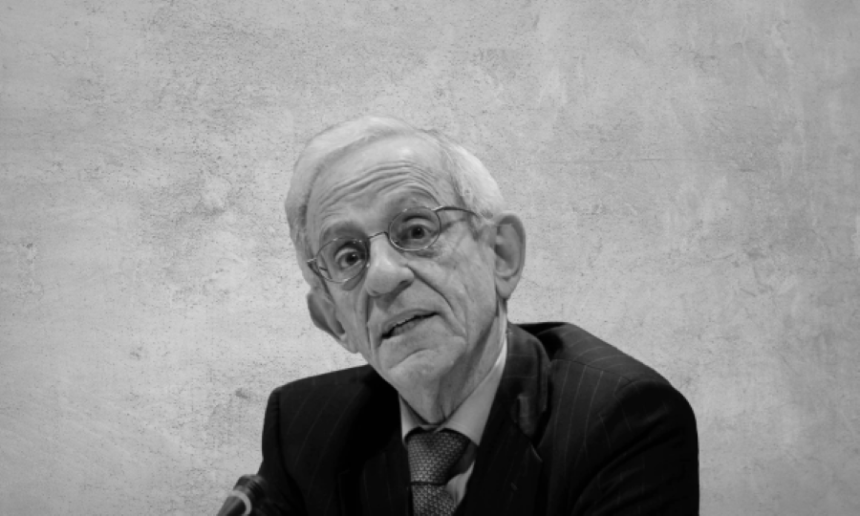
Johns Hopkins University professor Daniel Serwer has sharply criticized the Kosovo Specialist Chambers’ first-instance verdict against former Kosovo President Hashim Thaçi and three other former Kosovo Liberation Army (KLA) leaders, arguing that the controversy goes beyond the judgment itself and extends to the court’s establishment and mandate.
In a commentary published on his Peacefare website, Serwer wrote that “it is not just the verdict that is unjust,” arguing that the case reflects what he considers a broader failure by the United States and European countries to reconcile their past support for Kosovo with their role in establishing the Specialist Chambers.
The court convicted Thaçi and the other three defendants of certain war crimes while acquitting them of crimes against humanity. Thaçi received a 25-year prison sentence.
Serwer highlights what he calls a stark contrast
Serwer contrasted Thaçi’s imprisonment with political developments in Serbia, including President Aleksandar Vučić’s political trajectory and the recent burial of former Bosnian Serb military commander Ratko Mladić with high-profile honors.
He argued that the contrast was particularly striking because Thaçi had been a leading political figure during Kosovo’s struggle against Serbian rule, while Vučić served as Serbia’s information minister under Slobodan Milošević during the Kosovo war.
Serwer also pointed to Serbia’s recent honoring of Mladić, who was convicted of genocide and other crimes by the International Criminal Tribunal for the former Yugoslavia.
“One president of Kosovo, who had tried to protect his fellow citizens from Serbian repression, is in prison,” Serwer wrote, while Serbia was, in his characterization, strengthening a politician who had served a government responsible for attacks on civilians in Kosovo and honoring a figure convicted of grave crimes in Bosnia.
Criticism of the Specialist Chambers
Serwer argued that Kosovo, and Thaçi in particular, came under strong pressure from the United States and European governments to establish the Specialist Chambers through a constitutional amendment.
He described the institution as a Kosovo court in legal terms but international in its essential structure because of its international staff and operations.
Serwer also revisited the origins of the court, saying it had been created in response to allegations of organ trafficking raised in a Council of Europe report. He argued that investigators did not establish evidence supporting those allegations and subsequently focused on other allegations, including claims originating from Serbian intelligence services.
He acknowledged that some allegations of crimes committed by KLA members were true but disputed the prosecution’s characterization of Thaçi’s command role.
“I do not believe Thaçi had command authority over the forces that committed the crimes,” Serwer wrote, referring both to testimony from Americans familiar with the situation and to a conversation he said he had with Thaçi after the war.
According to Serwer, Thaçi had described himself as the KLA’s political spokesman rather than a fighter or military commander.
Serwer questions Western policy
Serwer also criticized the political circumstances surrounding the creation and operation of the Specialist Chambers.
He argued that European governments had invested approximately €200 million in the institution and that Serbia had pressured Western governments by arguing that international justice had disproportionately prosecuted Serbs for crimes committed during the wars in Bosnia and Kosovo.
Serwer said that Western governments had once sought to protect KLA leaders from what they considered unjust treatment but had since shifted toward narrower strategic interests.
He also argued that Thaçi, both as prime minister and president, had maintained closer relations with Washington than Kosovo’s current leadership.
Appeals could take years
Serwer expects Thaçi and the other convicted former KLA leaders to appeal the judgment.
He warned that the appeals process could take years and that the defendants could remain imprisoned during that period, as they were throughout much of the trial.
He said the sentences could eventually be reduced through the appeals process, while also arguing that the Specialist Chambers had created a precedent that future states should consider carefully before establishing similar judicial institutions without a clear mechanism for ending them.
Calls for peaceful reactions
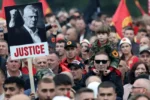
Serwer said many Kosovo Albanians would regard the verdict as unjust and could respond with protests, but urged them to remain peaceful.
“Violence will do no good,” he wrote, while making the same appeal to those who might celebrate the verdict in Serbia or among Kosovo’s Serb community.
He argued that the immediate challenge for Kosovo would be managing the political and social reaction to the ruling without allowing tensions between communities to escalate.
“They should be ashamed”
Serwer concluded with his strongest criticism of the United States and Europe, arguing that Western governments should be ashamed of their role in the process.
“The Americans and Europeans should be ashamed,” he wrote, accusing them of having “criminalized a liberation movement they had supported” and of turning international justice into what he described as political retaliation.
Serwer’s comments are his personal assessment of the Specialist Chambers and its proceedings and do not represent the official position of Johns Hopkins University, the U.S. government or European institutions.
He concluded that the controversy surrounding the case is not limited to the first-instance judgment, writing: “It is not just the verdict that is unjust. It is the court itself.”