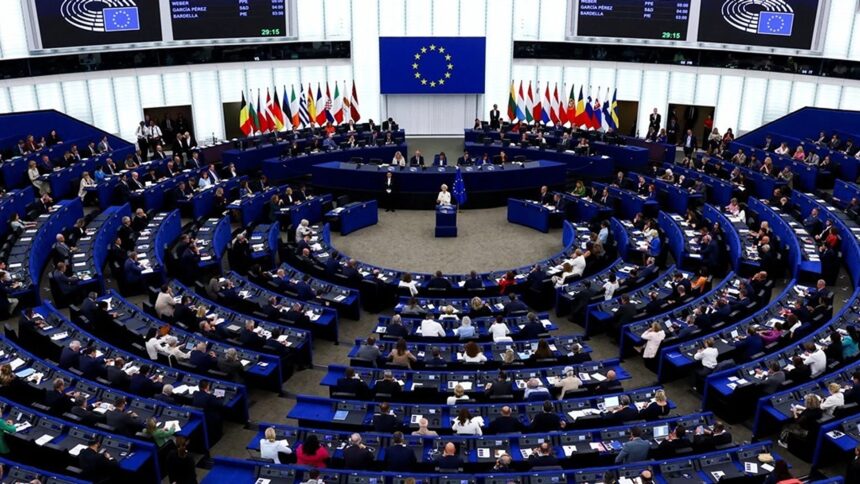
Europe needs a new emergency security mechanism modeled on the function of Article 4 of NATO to enable a faster response to hybrid threats and destabilizing actions attributed to Russia, European Commission President Ursula von der Leyen said.
Speaking after addressing issues including trade, artificial intelligence and climate change, von der Leyen turned to Europe’s security situation and what she described as a growing pattern of hybrid threats.
She referred to a collision this week involving a Danish helicopter and a Russian frigate in the Baltic Sea, the downing of a drone over Lithuanian airspace, and the case of a person suspected of being a Russian spy who, according to authorities, has been linked to a drone attack in Leipzig last month.
Von der Leyen warned that Europe should not underestimate the situation.
“We must have no illusions about what is happening here: the hybrid threats Europe is facing are becoming less and less hybrid and less and less merely threats,” she said.
According to the Commission president, cyber sabotage, arson attacks and drone incursions are increasing, and European countries must strengthen their preparedness in response.
Von der Leyen proposed the creation of a “counter-hybrid threats handbook” that would establish a common European approach to responding to such incidents.
She said the mechanism would complement existing NATO structures, particularly Article 4.
“In other words, we need a mechanism to complement NATO’s Article 4. I believe the time has come for a European article of its own, an emergency security protocol,” von der Leyen said.
Under her proposal, if a member state activated the mechanism following a serious security incident, all EU member states would be required to meet to discuss the situation and coordinate a common response.
Article 4 of the NATO Treaty allows member states to request consultations with their allies when one of them considers that its security, territorial integrity or political independence is threatened.
Activation of Article 4 does not automatically mean military action. It serves as a mechanism for political and security consultations among NATO allies.
Von der Leyen’s proposal would give the European Union a similar mechanism for rapid coordination and response to hybrid threats, amid growing European concerns over drone incidents, sabotage and suspected Russian activities.