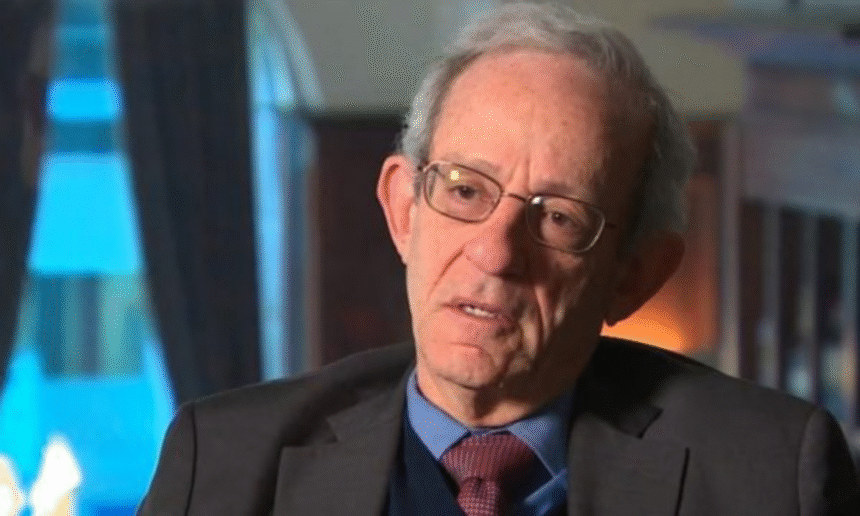
Prominent American Balkan analyst Daniel Serwer has issued a stark warning regarding the shifting security landscape in Southeastern Europe. He cautioned that Pristina must prepare for a potential reduction in US military presence and called on NATO-member Albania to step in aggressively to bolster Kosovo’s defense architecture.
In an interview with A2CNN, Professor Daniel Serwer, a seasoned expert on Western Balkan politics at Johns Hopkins University, outlined a troubling geopolitical outlook for Kosovo amid its prolonged domestic political gridlock.
Serwer explicitly sounded the alarm over Belgrade’s long-term strategic intentions, stating that Serbian President Aleksandar Vučić is actively playing a waiting game to alter borders in the region.
“It is entirely clear that Serbia, under Vučić, is waiting for a favorable geopolitical window of opportunity to seize, at the very least, the north of Kosovo,” Serwer declared. “Belgrade has no ambition to capture the rest of Kosovo’s territory, as doing so would trigger a protracted guerrilla war that would prove utterly devastating for Serbia itself.”
Preparing for a Diminished US Military Footprint
A central component of Serwer’s assessment is the long-term reliability of Western security guarantees. While expressing a personal preference for American forces to maintain or expand their current footprint within the NATO-led KFOR mission, he warned Kosovar leadership to face a pragmatic reality.
- Anticipating Draws: Kosovo must structurally adapt to a future scenario where the United States scales back its military commitments.
- The Albania Factor: To counter this vulnerability, Serwer proposed that Albania—as a full NATO member state—should play an enhanced, direct role in securing its neighbor by deploying a larger contingent of troops to Kosovo under existing international frameworks.
- The NATO Imperative: Ultimate security can only be achieved through formal NATO accession. “Joining NATO would permanently resolve the vast majority of Kosovo’s structural vulnerabilities,” Serwer noted.
Political Paralysis Stalling Kosovo’s Defense Goals
Serwer sharply criticized the ongoing institutional gridlock in Pristina, warning that Kosovo’s domestic political instability is actively damaging its international standing and defense integration.
With the country facing extended periods of caretaker governance and political stagnation, its ability to lobby effectively for Western integration has stalled.
“The world is not going to stop and wait for Kosovo,” Serwer warned, emphasizing that an unstable governance model severely undermines the country’s push to join the Alliance. “Is active lobbying for rapid NATO integration happening right now? It is difficult to say. NATO is fundamentally highly reluctant to accept a new member state that cannot demonstrate a stable, functional government.”
Serwer concluded that Kosovo must urgently prioritize the stabilization of its state institutions and accelerate the training of the Kosovo Security Force (KSF) to meet rigorous NATO entry benchmarks before a shifting global landscape alters the regional status quo.