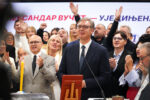
Dejan Šoškić, a candidate on Serbia’s Student List and former governor of the National Bank of Serbia, said he believes the country can move away from policies that have contributed to instability in neighboring states and adopt a more responsible, good-neighborly approach focused on regional cooperation.
“I believe Serbia will become a factor of stability and progress in the region,” Šoškić said in an interview with Montenegro’s Pobjeda newspaper.
He said Serbia should maintain an appropriate level of support for minority communities in other countries, but argued that such assistance must not turn into financing political instability in neighboring states.
Born in Belgrade and of Montenegrin origin, Šoškić said he considers it natural for Montenegro and Serbia to maintain the closest possible relations based on friendship, cooperation and mutual understanding — perhaps even stronger than their relations with some other neighboring countries.
Anti-corruption and public spending priorities
Discussing the priorities of a potential future government, Šoškić said it would focus on ending abuses, preventing corruption and ensuring transparency in all public contracts.
He argued that Serbia should reduce spending linked to what he described as illegal and corrupt deals that had drained the state budget over the past decade or more.
At the same time, he said the government should improve public revenue collection through stronger tax discipline and by ensuring that no debtor receives preferential treatment.
Šoškić also outlined an economic agenda centered on greater investment in knowledge, science, education, research and institutional development, as well as stronger links between research institutions and the private sector.
He said applying knowledge across different industries would help improve the competitiveness of Serbia’s economy and address the country’s persistent current account deficit.
Review of EXPO and major public contracts
Šoškić also criticized the previous government’s spending priorities, arguing that Serbia had allocated substantial public funds to projects where there was room for corruption, including EXPO, stadium construction and similar developments.
Regarding EXPO, he said the Student List supports a comprehensive review of the project, including a detailed assessment of existing agreements and, where possible, renegotiations to protect the state’s interests.
He said reviewing the contracts should also establish the conditions under which they were signed and potentially provide relevant material to investigative authorities if evidence emerges that officials negotiated agreements to the detriment of the state and taxpayers.
However, Šoškić stressed that the Student List would respect Serbia’s international obligations and seek to honor commitments made before the international community.
That would also include the EXPO project if all required procedures and planned steps had been properly completed, he said, adding that the group still lacked sufficient information about the project’s implementation and current status.