The European Union, Germany, Italy and the United Kingdom have expressed reservations about the proposed amendments to Kosovo’s Law on the Specialist Chambers, calling for further consultations before the Assembly makes a decision.
The EU Office in Kosovo said the proposed changes raise questions regarding Kosovo’s international commitments and several rule-of-law principles, including judicial independence, the protection of victims and witnesses, procedural rights and accountability. It also noted concerns about the constitutionality of the amendments.
The EU said it had been in contact with Kosovo’s authorities since the legislation was returned to the Assembly for reconsideration, emphasising the importance of consultations before any decision is taken.
Germany’s Embassy expressed full support for the EU’s position, while Italy also called for consultations in line with Kosovo’s international commitments. The Italian Embassy regretted that these discussions had not yet taken place and said the current law would serve neither Kosovo’s interests nor those of individuals recently convicted by the Specialist Chambers.
EU Enlargement Commissioner Marta Kos has also addressed the issue, saying that the proposed legal changes could create obstacles for Kosovo’s European integration process. She said the EU was discussing the matter with the Kosovo Government and expected the country to fulfil its obligations.
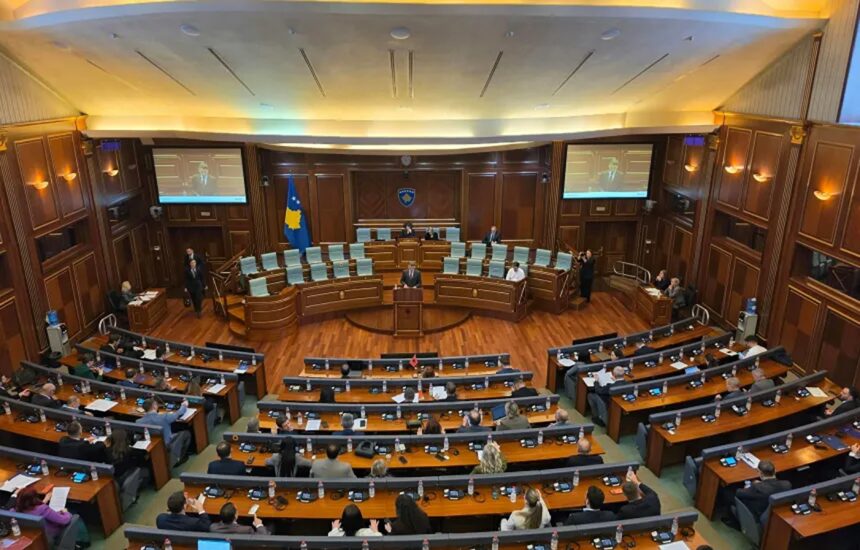
The issue was added to the Assembly’s agenda at the request of PDK’s parliamentary group.
PDK acting leader Vlora Çitaku called on MPs to support overturning President Justina Shiroka-Pula’s veto of the law. She pledged that her party would submit a new legislative initiative on Monday and work on the amendments within two weeks.
“I ask that the law be adopted today and that we immediately begin the amendment procedure on Monday. To demonstrate seriousness, let us give this process two weeks. I publicly pledge that on Monday we will submit the new legislative initiative and complete the amendments to this law within two weeks,” Çitaku said.
The Assembly session did not continue, leaving the remaining agenda items for the next sitting.
The United Kingdom also encouraged Kosovo to allow more time for consultations, both domestically and with the EU and other international partners. Its Embassy said the proposed amendments would not serve Kosovo’s fundamental interests and could affect its relations with international partners.
London acknowledged the public reactions and dissatisfaction surrounding recent verdicts by the Specialist Chambers, but stressed the importance of respecting international commitments and maintaining a commitment to accountability, justice and the rule of law.
The British Embassy called on the Assembly to use the time needed to reach a solution through further consultations.