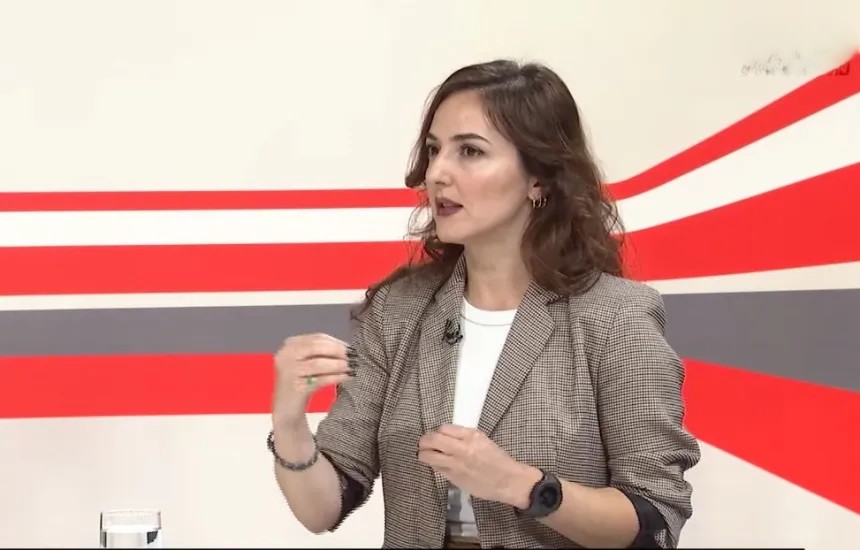
International relations and security expert Adelina Hasani has called for a coordinated three-step strategy in Kosovo following the September 16 verdict by the Kosovo Specialist Chambers in The Hague against four former Kosovo Liberation Army (KLA) leaders.
Hasani said Kosovo needs political unity, legal support for the defence teams and a more structured diplomatic effort in response to the ruling.
The Specialist Chambers found Hashim Thaçi, Kadri Veseli, Rexhep Selimi and Jakup Krasniqi guilty of war crimes, sentencing them to 25 years in prison for Thaçi and Krasniqi, 18 years for Veseli and 13 years for Selimi. The panel found them criminally responsible for illegal or arbitrary arrest and detention, cruel treatment, torture and murder, while acquitting them of the charged crimes against humanity.
Speaking on KTV’s “60 Minuta” programme on Thursday, Hasani said the first step should be to calm the domestic political situation and bring political actors and civil society together.
“What we are hearing mostly from the parties is that they are preparing more for an election campaign than for achieving internal unity. Without calming the political situation, we cannot develop a strategy,” Hasani said.
She argued that the response should not be limited to the legal dimension, but should also address the political and diplomatic implications of the verdict and the international narratives surrounding Kosovo and the KLA.
According to Hasani, the second step should focus on providing support to the defence teams involved in the case.
“The second step is the legal aspect, namely the support that should be given to the defence team, and unfortunately, we are not seeing this happening,” she said.
The third element, she added, should be a more structured diplomatic effort aimed at presenting Kosovo’s position internationally and providing greater context about the history of the KLA and the circumstances surrounding its emergence.
Hasani also referred to what she described as narratives about Kosovo and the KLA in Russian discourse, including allegations concerning organ trafficking. She argued that Kosovo should use the current situation to address such narratives through diplomatic channels and present the historical circumstances surrounding the KLA.
She further called for Kosovo to strengthen relations with EU member states that support its European integration process.
Hasani specifically cited Ireland as a country she said has provided strong support for Kosovo’s EU aspirations, arguing that such relationships could be used to advance both Kosovo’s international narrative and its European agenda.
Her comments come after the Specialist Chambers’ first-instance judgment, with the case now moving into the post-trial phase. The court has also begun proceedings concerning potential reparations for participating victims.