As the European People’s Party (EPP) prepares to make a final decision on the status of the Serbian Progressive Party (SNS) at its Political Assembly scheduled for December 7–8, several political figures and analysts argue that SNS should be expelled from the European political grouping.
They stress that the party’s record during its 14 years in power cannot simply be erased and that it should not be treated as an ordinary opposition party following its electoral defeat.
The EPP launched an internal review of its relationship with SNS in September 2025 to assess whether the Serbian party was respecting the fundamental values of the largest political grouping in the European Parliament.
The review was prompted by reports of repression against participants in civic and student protests, as well as concerns over state honours and the presence of senior Serbian officials at the funeral of convicted war criminal Ratko Mladić.
Losing its associate membership in the EPP would represent a significant blow to SNS’s international political standing, particularly following its defeat in the parliamentary elections. The party’s anti-European rhetoric during the election campaign has also raised questions about its credibility among European officials.
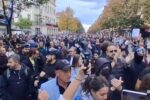
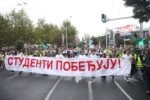
The distance between European institutions and Serbia’s outgoing government became increasingly visible during two years of demonstrations, with criticism becoming more direct following the electoral victory of the Students’ List.
The question now is whether SNS’s conduct as an opposition party could influence the EPP’s final decision on its membership.
Dragana Đurica: SNS should be expelled because of its record in power
Dragana Đurica of the European Movement in Serbia told Danas that the EPP should be criticised for delaying a serious consideration of SNS’s expulsion until after the party lost power.
She recalled that the EPP launched an internal review last year, promising that the process would be thorough and swift.
“More than a year has passed, and there is still no decision. In the meantime, the European People’s Party has had more than enough time to assess SNS’s attitude towards democratic institutions, the rule of law, citizens and the European values it claims to uphold,” Đurica said.
She argued that if SNS is expelled, the decision should be based on its conduct during its time in government rather than its electoral defeat, stressing that responsibility for the previous 14 years cannot be erased.
“The fact that the EPP is only now, following SNS’s electoral defeat, seriously reconsidering its membership raises questions. European values should not become a criterion only when a party loses power,” she said.
According to Đurica, SNS’s behaviour in opposition will also matter, particularly its response to election results, the peaceful transfer of power and democratic institutions.
However, she stressed that the party’s previous record concerning European values cannot be overlooked.
She said she would not prejudge the outcome of the December assembly, noting that divisions and differing positions within the EPP were evident from the prolonged review process.
Nevertheless, she warned that any further delay, conditional membership or alternative arrangement instead of expulsion would raise questions about the EPP’s credibility and consistency in defending its principles.
“Support for Serbia’s European future must not be confused with political protection for one party, which SNS has certainly enjoyed from the EPP over the past years,” Đurica concluded.
Radomir Lazović calls for accountability
Radomir Lazović of the Green-Left Front (ZLF) said he would welcome SNS’s expulsion from the EPP, although he would prefer to see the party banned in Serbia and its senior officials prosecuted for alleged wrongdoing.
He argued that SNS should not be regarded as a conventional political party, accusing it of corruption and the misuse of state institutions.
Lazović said SNS would likely attempt to present itself as a regular opposition party to the Students’ List, but maintained that its previous use of the media, intelligence services, police and judiciary must also be taken into account.
He insisted that those responsible must be held accountable.
Nebojša Krstić rejects grounds for expulsion
Meanwhile, SNS member Nebojša Krstić told Danas that he saw nothing in the party’s conduct that would call its EPP membership into question.
He suggested, however, that the membership could be challenged if parties he accused of participating in the organisation of a so-called “colour revolution” in Serbia decided to pursue such an initiative.
The EPP’s December 7–8 Political Assembly is expected to determine the future of SNS’s associate membership, following more than a year of internal scrutiny and growing debate over the party’s political record.