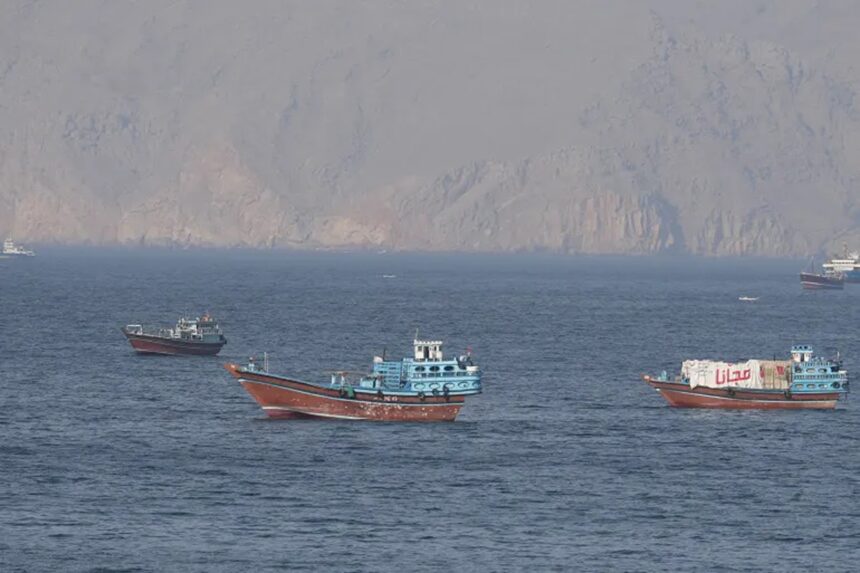
Iran is attempting to force shipping companies to comply with a new transit protocol for passing through the Strait of Hormuz, warning that vessels could otherwise face attacks.
Tehran has introduced a new set of regulations for ships seeking to transit through the strategic waterway, according to a document obtained by CNN, as part of broader efforts to formalize control over the strait despite warnings from the United States.
Titled “Declaration for Vessel Notification,” the document is an application form issued by the newly established Persian Gulf Strait Authority (PGSA). It must be completed by all vessels seeking safe passage through the strait. The document was provided to CNN by “Lloyd’s List” and another shipping industry source who requested anonymity.
Before the U.S.-Israeli military campaign against Iran began in late January, ships of all nationalities were generally free to sail through the strait. However, since the conflict escalated, Iran has threatened to attack any vessel passing through Hormuz without permission from the naval forces of the Revolutionary Guard.
Several ships have reportedly been attacked, while many shipowners and operators have chosen not to risk sending vessels through the area against Iranian warnings.
The PGSA document contains 40 questions, requiring vessels to provide details such as the ship’s name, identification number, any previous names, country of origin, and destination.
It also requires disclosure of the nationalities of the registered owners, operators, and crew members, as well as information about the cargo being transported.
According to the PGSA, this information must be submitted by email before a ship is allowed to transit through the Strait of Hormuz.
An accompanying email from the authority warns that “complete and accurate data are essential” for processing transit requests and states that “further instructions will be communicated via email.”
It remains unclear whether any shipping companies have formally requested permission from the PGSA. Analysts warn that doing so could expose them to potential U.S. sanctions.