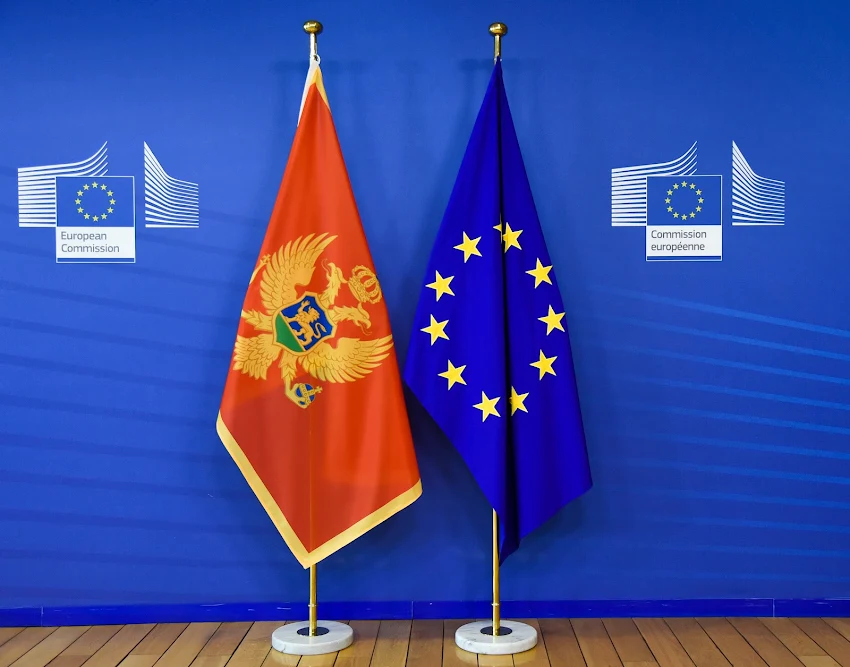
Ireland is confident that Montenegro could join the European Union in 2028, becoming the bloc’s 28th member, while efforts are underway to address outstanding bilateral concerns that could otherwise complicate the final stages of the accession process.
Irish Minister for European Affairs Thomas Byrne said EU enlargement remains in the interest of existing member states once candidate countries meet the required standards.
“We cannot predict elections or what will happen in the 27 EU member states, but I know that it is in the interest of member states for the EU to enlarge when candidates meet the standards we have set for them,” Byrne said, according to the Financial Times.
Montenegro still needs to close 10 of the 33 negotiating chapters in its EU accession process. The European Commission estimates that the country could sign its accession treaty in June next year.
Once the treaty is signed, the final step would be ratification by all 27 existing EU member states. However, concerns are growing that domestic political developments and the influence of far-right, Eurosceptic parties in some countries could threaten the process.
In France, for example, approving a new EU member requires either a three-fifths parliamentary majority or a national referendum, raising concerns about potential political obstacles to enlargement.
Byrne said work was already underway on drafting Montenegro’s accession treaty and noted that the Montenegrin government was actively engaging with EU capitals and national parliaments.
“I have strongly encouraged them to do so,” the Irish minister said.
He acknowledged that approval by existing member states was a crucial part of the accession process, adding that EU officials were actively considering how to ensure the process could be completed successfully.
Byrne also expressed confidence that Ireland could help secure an agreement addressing Croatia’s bilateral concerns regarding Montenegro before the end of the year.
Croatia, which shares a border with Montenegro, has linked its support for Montenegro’s EU accession to the resolution of outstanding issues stemming from the conflicts in the Balkans during the 1990s.
“Croatia has been really cooperative in this process. There are undoubtedly certain bilateral issues, as well as issues inherited from the past, but I know that they are working very closely with the Montenegrin government to resolve them,” Byrne said.
He added that high-level meetings had taken place in recent weeks and that discussions between Montenegro and Croatia were continuing, with the EU encouraging both sides to reach an agreement.
“EU membership has historically been an excellent way of resolving outstanding bilateral issues,” Byrne stressed.