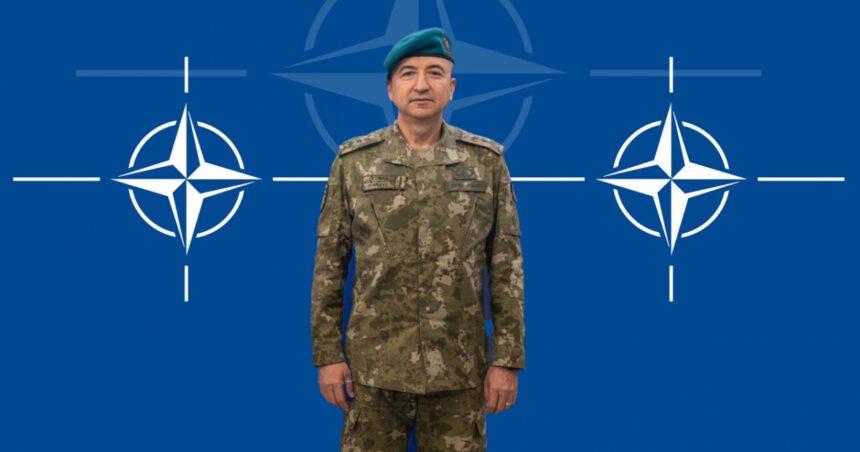
The Commander of the NATO-led Kosovo Force (KFOR), Major General Özkan Ulutaş, has delivered a calm yet cautious assessment of the country’s current security landscape.
In an interview with Telegrafi, the commander confirmed that while the overall security situation across Kosovo remains peaceful with no indicators of immediate, direct military or asymmetric threats, a toxic mix of unresolved political tensions, inflammatory rhetoric, and rampant disinformation continues to pose a challenge to long-term stability.
1. The Status of the North: Calm But Closely Monitored
Addressing the historically volatile northern municipalities, Major General Ulutaş noted a significant stabilization in the region, drawing a sharp contrast to previous periods of unrest.
KFOR Security Risk Assessment Checklist
[ Direct Military Threat ]  ──► None Flagged (Situation Assessed as Calm)
[ Active Border Escalation ] ──► Under Control (No Repetition of 2023 Incidents)
                                       │
                                       ▼
        [ Hybrid Risks Requiring Continuous NATO Vigilance ]
        • Systemic Disinformation Campaigns  • Inflammatory Rhetoric
        • Unresolved Political Gridlock       • Sudden Localized Flashpoints
- No Repeat of 2023: The commander emphasized that the ground situation has stabilized, with zero security incidents matching the intensity or scale of the violent clashes recorded throughout 2023.
- The Vigilance Mandate: Despite the quiet on the ground, Ulutaş made it clear that KFOR is absolutely not lowering its defensive posture or scaling back operations. He warned that underlying diplomatic issues could easily be weaponized by irresponsible public actors to incite localized panic.
2. Operational Readiness and the Chain of Response
Major General Ulutaş reaffirmed that KFOR’s deployment parameters are at peak operational capacity, meaning NATO forces are fully prepared to shut down any sudden security deterioration.
| Operational Dimension | KFOR Asset Readiness Status | Strategic Partnership Network |
| Tactical Equipment | Fully optimized and tailored for rapid all-terrain mobility across Kosovo. | Seamlessly linked with domestic Kosovo Security Institutions. |
| Personnel Training | Advanced crowd-and-riot control (CRC) and border monitoring capabilities. | Constant operational alignment with the European Union Rule of Law Mission (EULEX). |
| Response Timelines | Strategic positioning guarantees immediate containment of localized flashpoints. | Open, backchannel communications maintained with regional defense authorities. |
“KFOR remains fully prepared to respond to any potential deterioration of the situation. The NATO mission is comprehensively equipped, rigorously trained, and strategically positioned to react rapidly the exact moment a necessity arises.”
— Major General Özkan Ulutaş
3. The Final Verdict: No Military Solution
The KFOR commander concluded his briefing by reminding political leaders in both capitals that true, long-term stability in the Western Balkans cannot be engineered via military deployments or defensive fortifications.
The Path to Long-Term Stability
[ Kinetic / Military Options ] ──► Temporarily Freeze Conflicts (Short-Term Containment Only)
                                              │
                                              ▼
[ Prishtina-Beograd Dialogue ]  ──► Normalization of Bilateral Ties (True Sustainable Security)
Ulutaş reiterated that NATO’s primary role is to maintain a safe and secure environment (SASE) and guarantee freedom of movement as a third-tier security responder. Ultimate regional normalization can only be achieved if Prishtina and Belgrade step away from confrontational messaging and re-engage in good faith with the European Union-facilitated political dialogue.