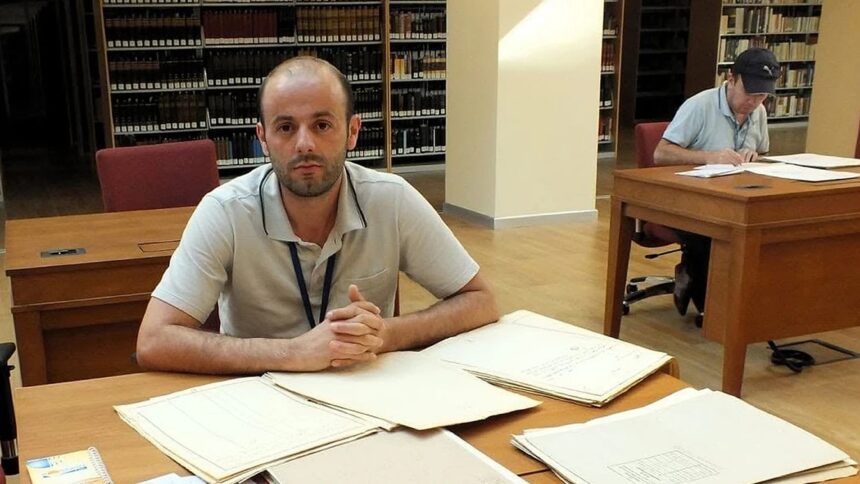
Historian and Ottomanist Agron Islami discusses what Ottoman archives can reveal about Kosovo’s social and economic history, demographics, urban life, women, religious institutions, endowments, and everyday life.
From Ottoman registers and court records to waqf documents and inscriptions, these sources offer a detailed picture of Kosovo during the Ottoman period. Islami emphasizes that such documents must be approached critically, since administrative records also reflect the language and perspective of the state that produced them.
He points to Ottoman archival material preserved in Istanbul as an important source for understanding Kosovo’s past, while stressing the need to compare Ottoman records with sources from other provenances.
Among the subjects highlighted are the early Ottoman registers of 1431 and 1455, the development of Kosovo’s towns, the emergence of urban centers such as Gjakova, Kaçanik and Gjilan, the role of Albanian families in establishing waqfs, and evidence concerning women’s property, marriage, divorce and legal rights.
Islami also stresses the importance of Ottoman inscriptions on gravestones, describing them as an “archive in stone” that can preserve information about individuals, their professions, families, places of origin and even the circumstances of their deaths.
He argues that much remains to be discovered, particularly earlier Ottoman registers and documents related to the First Battle of Kosovo in 1389.
At the same time, Islami warns against relying on simplified historical narratives. For him, the historian’s responsibility is to distinguish between documented history, administrative propaganda and popular memory—and to allow archival evidence to challenge long-established assumptions.
He also highlights Kosovo’s tradition of Ottoman studies, mentioning scholars such as Hasan Kaleshi, Muhamet Tërrnava, Skender Rizaj and Iljaz Rexha, while expressing concern over the lack of a new generation of specialists trained specifically in Ottoman paleography and archival research.