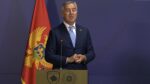
Lebanon’s President Joseph Aoun has called for direct negotiations with Israel as part of a proposal aimed at ending the escalating conflict with Hezbollah, while sharply criticizing the Iran-backed group for dragging the country into a wider regional war.
A spokesperson for President Aoun told BBC that Lebanon is ready to negotiate, but not while the country remains under Israeli fire. During a virtual meeting with senior European Union officials on Monday, Aoun presented what he described as a path toward “lasting security and stability on our borders.”
Israeli officials have shown little sign of supporting negotiations. According to Aoun’s four-point plan, a “full ceasefire” would be accompanied by the disarmament of Hezbollah and international assistance to the Lebanese Armed Forces to regain control over “areas of tension.”
“At the same time, Lebanon and Israel would begin direct negotiations under international supervision to implement the plan,” the statement said.
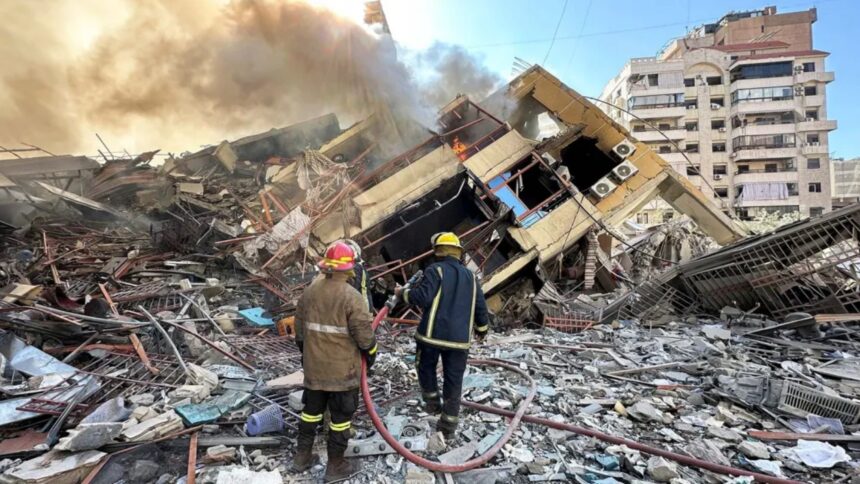
Aoun said the war has had devastating consequences for Lebanon, with more than 700,000 people displaced, including 200,000 children, and hundreds killed in Israeli strikes over the past nine days, according to the United Nations.
“Some of them are on the streets. They have no shelter and lack even the most basic necessities of life,” he said.
The president also delivered rare criticism of Hezbollah, accusing the Shiite militia and political movement of acting against Lebanon’s national interests. Referring to Hezbollah as an “armed faction,” Aoun said it “pays no attention to Lebanon’s interests or the lives of its people” and seeks the “collapse of the Lebanese state under aggression and chaos.”
His remarks followed the government’s announcement last week that Hezbollah’s military operations were illegal, although the state currently lacks the capacity to disarm the group on its own.
Last week, Israeli Prime Minister Benjamin Netanyahu addressed the Lebanese government directly on X, writing:
“It is your responsibility to implement the ceasefire agreement and it is your responsibility to disarm Hezbollah.”
Joshua Zarka, Israel’s ambassador to France, said Tuesday that Beirut has taken no meaningful steps toward disarming the group.
“At this stage, I am not aware of any decision to enter negotiations to end this war,” he said. “What would end it is the disarmament of Hezbollah, and that is a choice for the Lebanese government.”
Although a ceasefire agreement between Israel and Lebanon was reached in November 2024 under mediation by the United States and France, it has largely failed to hold. Israel has continued near-daily strikes in Lebanon, accusing Hezbollah of trying to rearm and rebuild its presence.
Two days after the joint U.S.-Israel attack on Iran, Hezbollah entered the conflict by launching rockets and drones into northern Israel. The group said it was retaliating for the killing of Iran’s Supreme Leader, Ayatollah Ali Khamenei, and for ongoing Israeli strikes.
Aoun described this as a deliberate trap for Lebanon and its army, designed to draw Israeli forces into another incursion. Israel said Hezbollah’s attack justified launching a broader campaign against the group, including repeated airstrikes and commando operations inside Lebanese territory. Israel has said the campaign will continue until Hezbollah is disarmed.
Meanwhile, Hezbollah has declared it will continue attacking Israel at any cost.
At least 486 people have been killed in Israeli strikes in Lebanon since then, according to the Lebanese Health Ministry. Two Israeli soldiers have been killed in fighting in southern Lebanon, according to the Israeli military.
For families caught in the crossfire, the escalation has brought renewed fear. Ahmed al-Halabi, a father of two from the Dahieh area in southern Beirut, fled with his family in the middle of the night as rockets struck nearby.
“We were running from the bombardment! There is no safety!” he told the BBC. “I have small children and living conditions were already bad. You can imagine what it’s like during war. I just want to keep my children safe.”
Ahmed now lives in a school in central Beirut that has been turned into a shelter.
“This is the second time my children have experienced this and they have developed psychological trauma. Adults can live with this. Children cannot.”