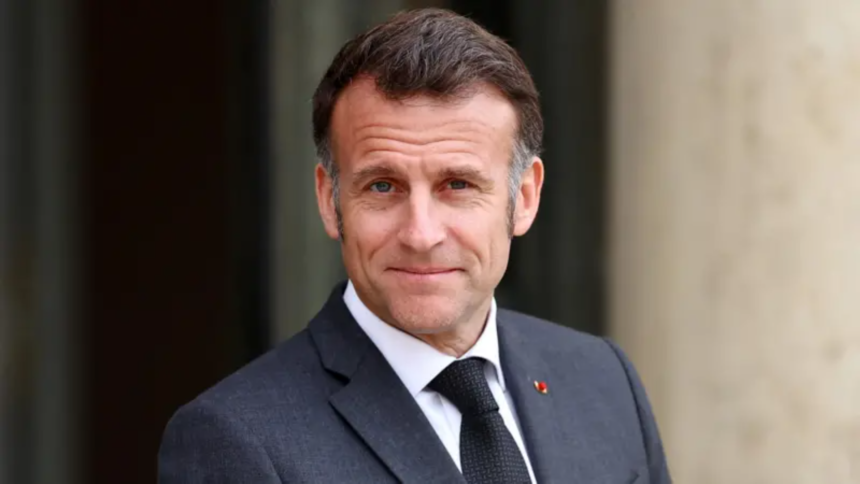
In a major diplomatic gamble aimed at reshaping global economic architecture, French President Emmanuel Macron is preparing to host a historic, high-stakes video conference between the Group of Seven (G7) nations and China.
According to four senior officials across three G7 governments, the call is scheduled for this coming Thursday, June 11, 2026. The extraordinary session serves as the curtain-raiser for the formal G7 Leaders’ Summit, which France is hosting next week in the tranquil lakeside resort of Evian-les-Bains.
The initiative represents a sharp, tactical pivot for the G7—a bloc of Western democracies that has spent the last several years escalating a confrontational, protectionist stance against Beijing’s economic expansion.
The French Doctrine: Moving Beyond “Finger-Pointing”
As holder of the rotating G7 presidency for 2026, France has structurally repositioned the summit’s agenda to focus on macroeconomic stabilization. Rather than isolating Beijing, Paris is championing a highly nuanced, multi-lateral diagnostic framework for current geopolitical trade friction.
French diplomats argue that global trade imbalances are a tripartite systemic failure, refusing to place blame solely on Chinese industrial strategy.
[The French Tripartite Balance Sheet on Global Trade]
• Chinese Vulnerability: Industrial overproduction and state-subsidized manufacturing saturation.
• American Vulnerability: Chronic domestic overconsumption and runaway fiscal deficits.
• European Vulnerability: Severe, multi-year underinvestment in industrial innovation.
This position was explicitly outlined by French Finance Minister Roland Lescure during last month’s G7 Ministerial assembly, where he emphasized that Paris is determined to transition the West away from zero-sum economic warfare.
“Global imbalances… are not sustainable. They’re growing, they’re persistent,” Lescure warned. “They have to stop. We want to move away from finger-pointing and constructively engage with all global partners, including Beijing.”
Trump’s Quiet Compliance and the Shifting Transatlantic Axis
Macron’s diplomatic maneuver comes at a highly opportunistic geopolitical window. U.S. President Donald Trump has notably dialed back his characteristically aggressive, tariff-heavy rhetoric toward China in recent weeks following a high-profile state visit to Beijing.
While the White House has not formally commented on Thursday’s scheduled video call, President Trump has officially confirmed his travel itinerary to France for the Evian-les-Bains summit.
                    ┌────────────────────────────────┐
                    │   THE EVIAN RE-ALIGNMENT MOVEMENT│
                    └───────────────┬────────────────┘
                                    │
         ┌──────────────────────────┴──────────────────────────┐
         ▼                                                     ▼
┌────────────────────────────────┐                    ┌────────────────────────────────┐
│       The Macron Doctrine      │                    │    The Shifted Trump Stance    │
│ • "Summit of Convergences"     │                    │ • Softened rhetoric post-     │
│ • Broad G7-China Engagement    │                    │   Beijing state visit.         │
│ • Multi-lateral blame-sharing  │                    │ • Confirmed attendance for     │
└────────────────────────────────┘                    └────────────────────────────────┘
For months, French envoys have quietly laid the groundwork for what Elysee officials originally envisioned as a structural “Summit of Convergences.” The goal is to bring Chinese leader Xi Jinping—or a top-tier state representative—into the G7’s orbit to forge an enforceable framework on global manufacturing thresholds.
Skepticism in Brussels: “The Wrong Format”
Despite France’s diplomatic momentum, the initiative has sparked significant friction within European Union headquarters in Brussels. A senior European Commission official, speaking on the condition of anonymity, labeled Macron’s outreach a net-positive strategic concept executed via an inherently flawed institutional pipeline.
“The French outreach to China is a good initiative, but it is within entirely the wrong format,” the European Commission official observed. “The G7 is viewed by Beijing as anything but neutral. China would certainly be glad to see the G7 dial down its confrontational rhetoric, but absolutely not at the expense of being forced to recognize that its domestic overproduction is an international problem.”
While the exact diplomatic tier of representation for Thursday’s call remains fluid, the session is expected to feature direct, head-of-state participation from several key G7 members, setting up a monumental geopolitical clash of economic ideologies ahead of the Evian summit.