Israeli Prime Minister Benjamin Netanyahu has warned that Hezbollah will pay “a very heavy price” after four Israeli Defense Forces (IDF) soldiers were killed by an explosive strike overnight, drastically intensifying hostilities in southern Lebanon.
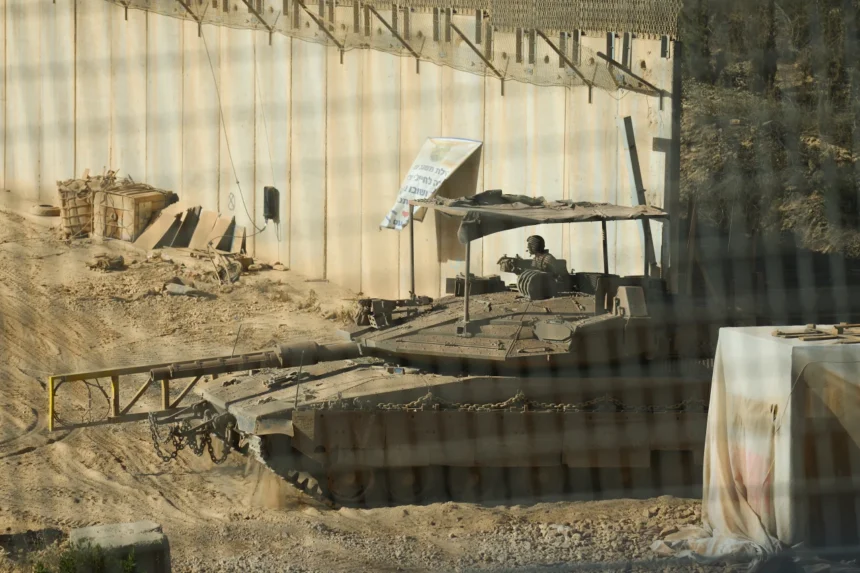
The fatal assault occurred in the southern Lebanese village of Kfar Tebnit, where a suspected drone or anti-tank missile struck a tank crew, marking the first Israeli military casualties since a United States-Iran memorandum of understanding was signed earlier this week to halt regional war hostilities.
“Following Hezbollah’s criminal attack, which constitutes a blatant violation of the ceasefire, I instructed the IDF last night to strike Hezbollah with force,” Netanyahu said in an official statement on Friday. “My directive is clear: Israel will not tolerate attacks on our soldiers or on our territory, and it will exact a very heavy price from Hezbollah for such attacks.”
Massive Retaliation and Far-Right Backlash
In immediate retaliation, the IDF launched a punishing, multi-front bombardment campaign targeting more than 80 positions across southern Lebanon and the eastern Beqaa Valley. Lebanese health authorities reported that the intense airstrikes killed at least 21 people on Friday, significantly disrupting emergency evacuation efforts.
The Border Zone Flashpoint (June 2026)

 [ HEZBOLLAH AMBUSH: 00:00 ] ──► CEASEFIRE SHATTERED
 • A drone/missile attack hits an IDF tank in Kfar Tebnit,
   killing a battalion commander and three crew members.

 [ RETALIATORY STRIKES ]       ──► CONTINUING THE WAR FOOTING
 • Netanyahu orders a heavy air offensive, while far-right
   ministers call for a total destruction model across Lebanon.
The deaths of the soldiers—including Lt. Col. Dor Gedalia Ben Simhon (32), commander of the 401st Armored Brigade’s 52nd Battalion—have ignited a fierce political firestorm within Jerusalem.
Far-right National Security Minister Itamar Ben-Gvir issued an aggressive public statement demanding total warfare:
“With all due respect to the Americans, Israel must make it clear to the entire world that the blood of our sons… is not up for bargaining. All of Lebanon must burn.”
The Geopolitical Stalemate Over the Buffer Zone
The sudden escalation threatens to derail fragile diplomatic channels orchestrated by Washington. While the recent US-Iran deal aimed to wind down the broader conflict, deep structural divisions remain over Israel’s newly expanded military map:
- The Israeli Stance: Netanyahu reiterated that Israeli troops “will remain in the security zone in southern Lebanon for as long as necessary” to insulate and protect communities in northern Israel from cross-border rocket fire.
- The Iranian Demands: Tehran continues to insist that a complete Israeli withdrawal from Lebanese soil is a non-negotiable prerequisite for maintaining the broader Washington deal, threatening to render the memorandum void if IDF operations persist.