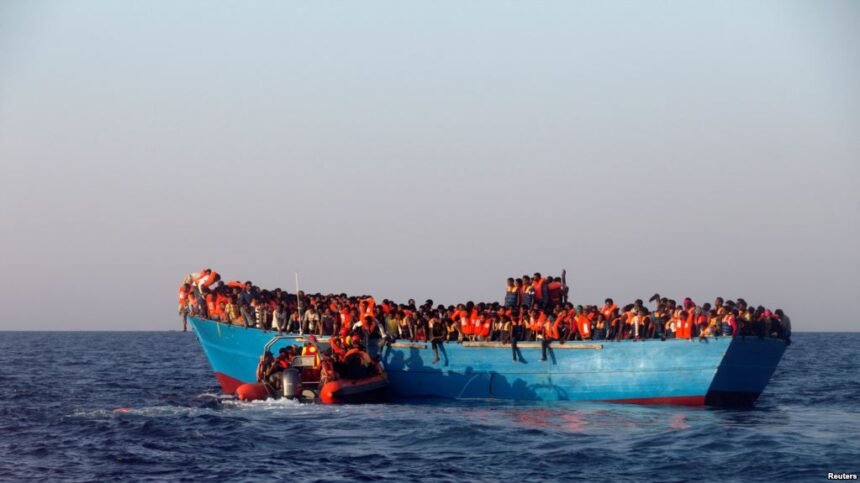
More than 1,300 migrants lost their lives during the first five months of 2026 while attempting to reach Spanish shores from Africa, a prominent human rights organization reported on Wednesday.
The advocacy group Caminando Fronteras (Walking Borders), which monitors irregular maritime crossings via the Mediterranean and Atlantic routes, revealed that 1,317 individuals died or went missing between January and May of this year. Among the confirmed casualties are 142 women and 129 children. The staggering toll also accounts for 27 vessels that completely vanished at sea with all passengers on board.
Perilous Atlantic Route Sees Surging Fatalities
The release of the report coincides with Pope Leo XIV’s highly anticipated apostolic visit to the Canary Islands, a Spanish archipelago that has emerged as a primary hotspot for irregular migration over the last decade. Human rights groups point out that intensified naval interceptions and tighter border security in traditional transit countries, such as Mauritania, have forced migrants to undertake longer, significantly more dangerous routes across the open Atlantic Ocean to evade detection.
While the shortest distance between the West African coastline and the Canary Islands spans roughly 100 kilometers (62 miles), unpredictable currents and overcrowded, unseaworthy vessels frequently turn the journey fatal. Alternatively, thousands still try to navigate the 20-kilometer-wide Mediterranean crossing from Morocco to mainland Spain, often attempting dangerous swims or utilizing flimsy rafts.
A Growing Humanitarian Crisis
The newly published figures signal an ongoing humanitarian crisis in the region. According to data provided by Caminando Fronteras, 3,090 people died or disappeared trying to reach Spain throughout the entirety of 2025.
During his tour of Spain this week, Pope Leo XIV heavily criticized the global handling of the migration crisis, explicitly characterizing the plight of these migrants as an urgent dilemma that challenges the very ethical foundations of the international order. The Pontiff is scheduled to visit key migrant reception hubs, including the Port of Arguineguín and the Las Raíces reception center in Tenerife, to meet directly with survivors and volunteers.