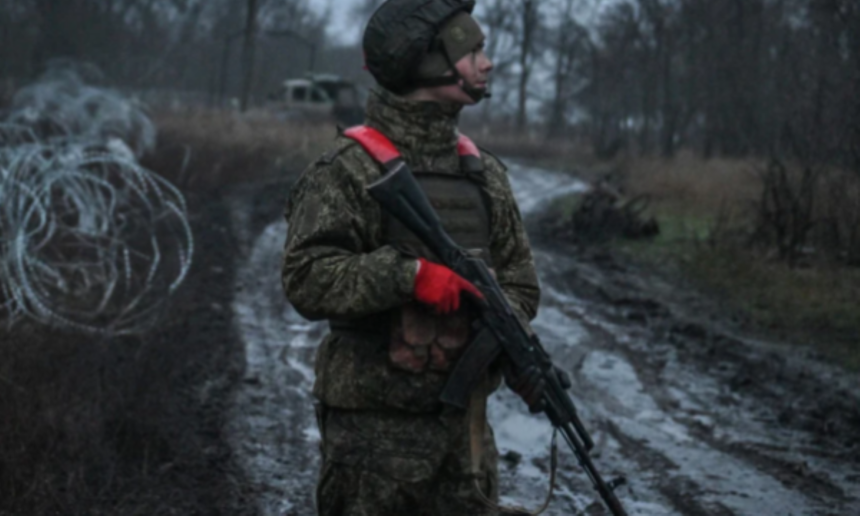
Russia is increasingly recruiting foreign nationals—primarily from some of the world’s poorest countries—by promising high salaries, civilian jobs, and even Russian citizenship, only to send many of them to the front lines in Ukraine, according to an investigation published by Deutsche Welle (DW).
Citing estimates from Ukraine’s military intelligence agency (HUR), the report says that around 27,000 foreign nationals have been recruited by Russia to fight in Ukraine. A joint study by the International Federation for Human Rights (FIDH), Truth Hounds, and the Kazakhstan International Bureau for Human Rights (KIBHR) concludes that Moscow has established a global recruitment network targeting people facing severe economic hardship, social vulnerability, or legal insecurity.
One of the cases highlighted is that of Oskar Kagola Mutoka, a former soldier from Kenya who traveled to Russia in 2025 after being promised employment. His family later discovered that he had been deployed to fight in Ukraine, where he was killed. His body was never returned to his relatives.
A similar story emerged from Cuba. Joan Viondi Mendoza was reportedly promised a monthly salary of $2,000 and Russian citizenship but instead found himself on the Ukrainian battlefield. He later contacted his family, pleading for help to escape the war. Shortly afterward, his name appeared on a list of those killed.
According to the investigation, many foreign recruits were unaware they would be sent into combat. They were allegedly offered jobs in construction, logistics, security, or agriculture but, upon arriving in Russia, were pressured into signing military contracts written in Russian.
Among them was Arman Mondol from Bangladesh, who said foreign recruits were used as “human shields” during military operations.
“They always sent us first into the line of fire while Russian soldiers stayed behind us,” Mondol recalled.
Mondol survived after the vehicle he was traveling in struck a landmine. He later escaped from a Russian military hospital and, with assistance from the Bangladeshi embassy, returned home. He continues to suffer from physical injuries and psychological trauma caused by the war.
Ilja Nusov, one of the study’s authors, argued that many of these recruitment practices could amount to human trafficking because they involve deception, coercion, and the exploitation of vulnerable individuals.
Russian authorities deny forcibly recruiting foreign nationals. Russian Foreign Minister Sergei Lavrov has maintained that all foreign fighters serving alongside Russian forces do so voluntarily and in accordance with Russian law.
However, Ukraine’s Coordination Headquarters for the Treatment of Prisoners of War estimates that Russia could recruit as many as 18,500 additional foreign nationals during 2026, suggesting that the practice continues to expand.