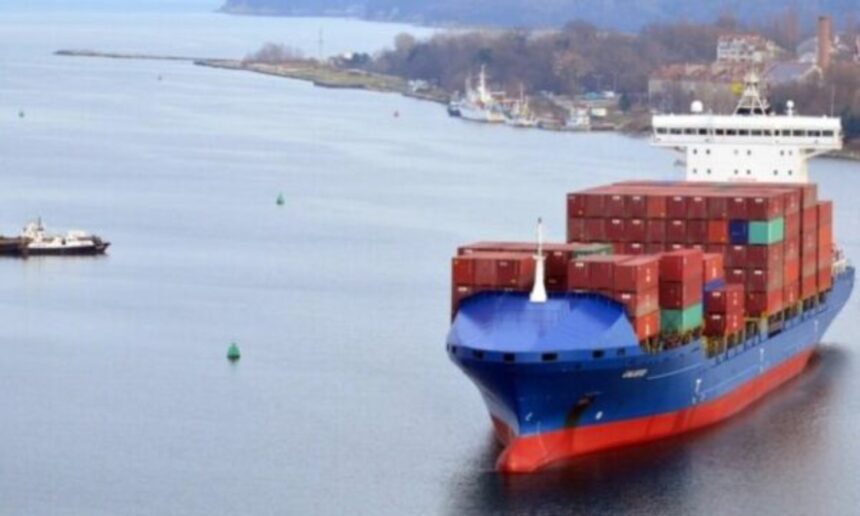
A new Iranian military supply route from Russia via the Caspian Sea has reportedly been identified in a European government document cited by NBC News.
According to the document, whose contents were confirmed by a Western official, Russia is transporting explosives, drone components and ammunition to Iran, potentially supporting Tehran’s efforts to rebuild military capabilities damaged during its conflict with the United States and Israel.
The shipments reportedly include trinitrotoluene (TNT), an explosive compound used in military applications, as well as components needed for drone production.
The scale of these transfers and the extent to which Iran has restored its military capabilities remain unclear, as Western intelligence agencies have not publicly released their assessments.
Why the Caspian Sea is considered a “secure corridor”
The route reportedly chosen by Moscow and Tehran is particularly significant. The Caspian Sea is a landlocked body of water bordered exclusively by Russia, Iran, Kazakhstan, Turkmenistan and Azerbaijan.
Under the legal framework governing the Caspian Sea, armed forces from states without access to the sea cannot establish a military presence there. This effectively prevents U.S. and other Western warships from operating in the area to intercept shipments moving between Russian and Iranian ports.
At the same time, vessels can reportedly disable their Automatic Identification System (AIS) transponders, making their movements more difficult to track.
This route therefore provides Moscow and Tehran with a way to avoid maritime chokepoints where the United States and its allies have significantly greater surveillance capabilities.
Rebuilding Iran’s drone program
A key objective appears to be the restoration of Iran’s drone-production capabilities.
Before the conflict, Iran had developed one of the region’s most significant drone programs, particularly around the Shahed series. Iran also supplied large numbers of these drones to Russia for use in the war against Ukraine.
U.S. and Israeli strikes have reportedly damaged significant parts of Iran’s military capabilities. Rebuilding its drone-production capacity requires both specialized components and explosives for warheads—materials reportedly included in the Russian shipments.
A shift in the Moscow–Tehran military relationship
The development is also significant because it represents, to some extent, a reversal of the military supply relationship between Russia and Iran.
For years, military assistance primarily flowed from Tehran to Moscow. Iran supplied Russia with drones and technical assistance to establish related production capabilities inside Russia, strengthening Moscow’s war effort in Ukraine.
Now, according to the latest information, Russia is reportedly supplying Iran with military materials.
For Moscow, strengthening Tehran could also serve broader strategic interests. A militarily stronger Iran could force the United States to devote additional forces and resources to the Middle East, potentially limiting the attention and resources Washington can dedicate to Ukraine.
Israel had already targeted the route
The supply corridor had reportedly already come under Israeli attack.
According to The Times of Israel, Israeli airstrikes in March 2026 targeted the port of Bandar Anzali on Iran’s northern Caspian coast.
The strikes reportedly damaged port infrastructure and Iranian naval vessels. Israeli officials said the operation was intended to disrupt this particular supply route.
However, the European document cited by NBC News suggests that the transfers either continued or resumed following the Israeli strikes. This indicates that the attack on Bandar Anzali may have caused only a temporary disruption or diversion rather than permanently shutting down the route.
A difficult supply network to disrupt
The geography of the Caspian Sea makes efforts to intercept these shipments particularly challenging.
The five littoral states have multiple ports, allowing for alternative routes and making it more difficult to disrupt the network by targeting a single facility.
Neither Moscow nor Tehran has publicly commented on the specific shipments.
It also remains unclear whether the volume of Russian supplies is sufficient to compensate for the military losses Iran has suffered as a result of U.S. and Israeli strikes.