Analyst Marko Banović of the Center for Digital Forensics (DFC) has stated that Russia and Serbia pursue different objectives regarding their influence in Montenegro, but both pose serious challenges to the country’s European future.
Presenting the analysis “Elections Under the Microscope: Threats to the Electoral Process in Montenegro,” Banović said that Russia’s strategy focuses on establishing control within Montenegrin institutions, while Serbia’s current strategy aims to halt Montenegro’s European integration process altogether.
“Russia’s influence strategy is much more focused on installing control within Montenegrin institutions, while Serbia’s current strategy is to completely stop Montenegro’s European integration,” Banović said.
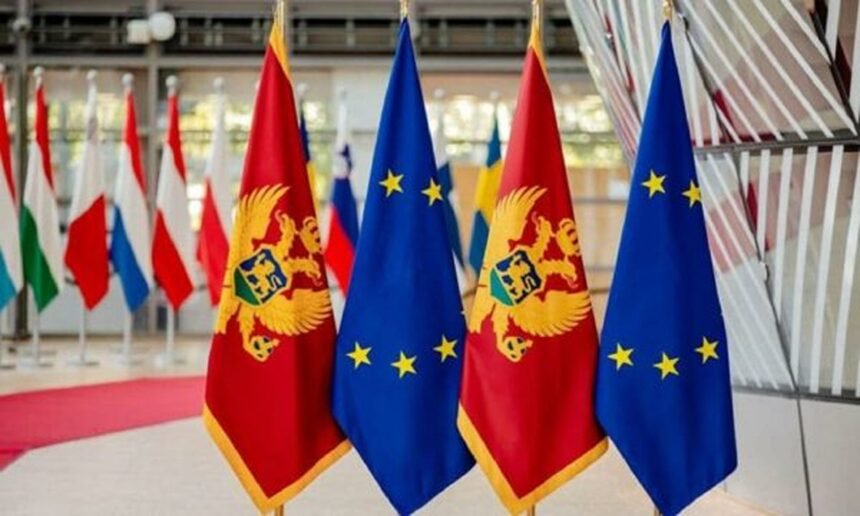
According to Banović, Montenegro’s accession to the European Union would represent a significant setback for the government in Belgrade, as it would demonstrate that a country in the region can successfully complete the path toward democracy and European integration.
The DFC analysis warns that Montenegro’s parliamentary and local elections in 2027 will be one of the country’s most important political moments, directly affecting institutional stability, the EU integration process, and the country’s long-term geopolitical orientation.
Banović stressed that Russian hybrid operations against Europe represent a complex and adaptive model designed to weaken political cohesion, social resilience, and the security capacities of European states.
According to him, Russia employs a broad range of tools to exert influence, including disinformation, information manipulation, cyberattacks, sabotage, organized crime, extremist groups, the instrumentalization of migration and religion, as well as political and economic influence.
The analysis identifies four main narratives used by Russia in its information operations. The first portrays the West as a system in crisis, claiming that liberal democracy creates instability and division. The second focuses on the alleged loss of sovereignty, arguing that the European Union and NATO restrict the autonomy of states. The third presents Russia as a defender of traditional values, family, and religion, while the fourth seeks to portray the West as aggressive and hypocritical.
Banović stated that disinformation campaigns by pro-Russian and pro-Serbian actors have influenced public opinion in nearly every electoral cycle in Montenegro since 2016.
One of the main narratives, he said, is the claim that Serbs in Montenegro are endangered and discriminated against. According to the analysis, this issue is used not only in Montenegro but throughout the Western Balkans to deepen identity divisions and further polarize society.
Another narrative portrays Montenegro as a “vassal state” lacking full sovereignty, with key decisions allegedly made by Western embassies rather than domestic institutions.
The report warns that issues such as the status of the Serbian language, state symbols, constitutional changes, and dual citizenship could be exploited as instruments to destabilize the political scene during the 2027 election campaign.
DFC also identifies the Serbian Orthodox Church as one of the primary mechanisms for spreading Russian and Serbian influence in Montenegro. According to the report, the organization has significant mobilizing potential that extends beyond religion into the spheres of national and political mobilization.
The report assesses that media outlets and social networks remain among the most important channels for spreading pro-Russian and pro-Serbian narratives, particularly through coordinated disinformation campaigns.
Also participating in the presentation was Frano Matušić, State Secretary at Croatia’s Ministry of Foreign and European Affairs, who stated that Montenegro is currently in a very favorable position in its EU accession negotiations.
He said he expects Montenegro to meet the necessary criteria and become the next EU member state, emphasizing that implementing reforms is just as important as adopting them.
Matušić also warned about the risks posed by hybrid threats to Montenegro’s democracy and institutions, stressing that free and fair elections remain the foundation of every democratic system.
Meanwhile, Montenegrin analyst Danilo Kalezić assessed that, in addition to Russia and Serbia, China may also seek to influence Montenegro’s future elections through political actors it supports. According to him, Serbia has a particular interest in preventing Montenegro’s EU membership, as such success would challenge Serbia’s authoritarian governance model and strengthen Podgorica’s Euro-Atlantic orientation.