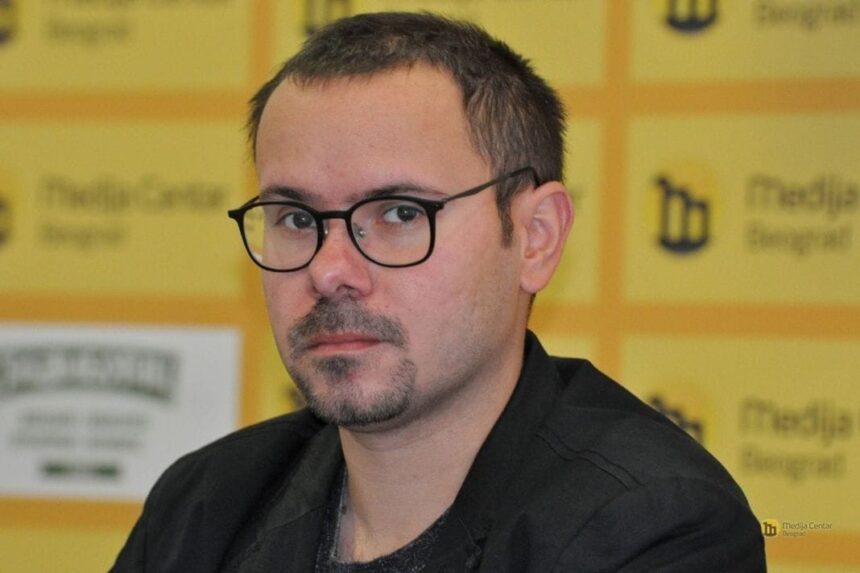
Serbian sociologist and columnist Aleksej Kišjuhas has sharply criticized comments by Serbia’s Minister of Public Administration and Local Self-Government, Snežana Paunović, arguing that her remarks about Kosovo exposed unresolved attitudes toward the crimes committed during the 1998–1999 war.
In an opinion piece published by Danas, Kišjuhas condemned Paunović’s statement that, had she been former Serbian president Slobodan Milošević, she would have “ethnically cleansed Kosovo in 1998.” He argued that her subsequent attempt to replace the term “ethnic cleansing” with “deportation” did not lessen the gravity of the statement, noting that forced deportation also constitutes a crime against humanity under international law.
According to Kišjuhas, the minister’s comments ignore the historical fact that the Milošević regime attempted to forcibly expel Kosovo Albanians during the war, an issue that was extensively documented in international investigations and addressed through convictions by the International Criminal Tribunal for the former Yugoslavia (ICTY).
The columnist argued that Serbian society has reacted strongly to the minister’s recent remarks while continuing to avoid confronting the crimes committed during the Kosovo conflict. He wrote that public silence regarding what he described as the original campaign of ethnic cleansing has enabled such rhetoric to persist in contemporary political discourse.
Kišjuhas also traced the origins of the term “ethnic cleansing,” arguing that it emerged from the wars in the former Yugoslavia before becoming part of international legal and political vocabulary. He further criticized past proposals by prominent Serbian nationalist figures advocating so-called “humane resettlement,” describing the concept as a euphemism for forced displacement.
Referring to findings by international human rights organizations and ICTY judgments, Kišjuhas wrote that Serbian security forces carried out coordinated operations aimed at expelling Kosovo Albanians through killings, intimidation, destruction of property, and mass deportations. He cited documented evidence, including mass graves discovered in Serbia, as proof of efforts to conceal war crimes.
While condemning calls to revive such policies, Kišjuhas also criticized current pressure on Kosovo Serbs, arguing that any policies encouraging ethnic displacement—regardless of the perpetrators—must be rejected.
He concluded that lasting stability in the region requires abandoning the idea of ethnically homogeneous states, warning that aspirations for “ethnically pure” societies have repeatedly led to violence and suffering across the Balkans.