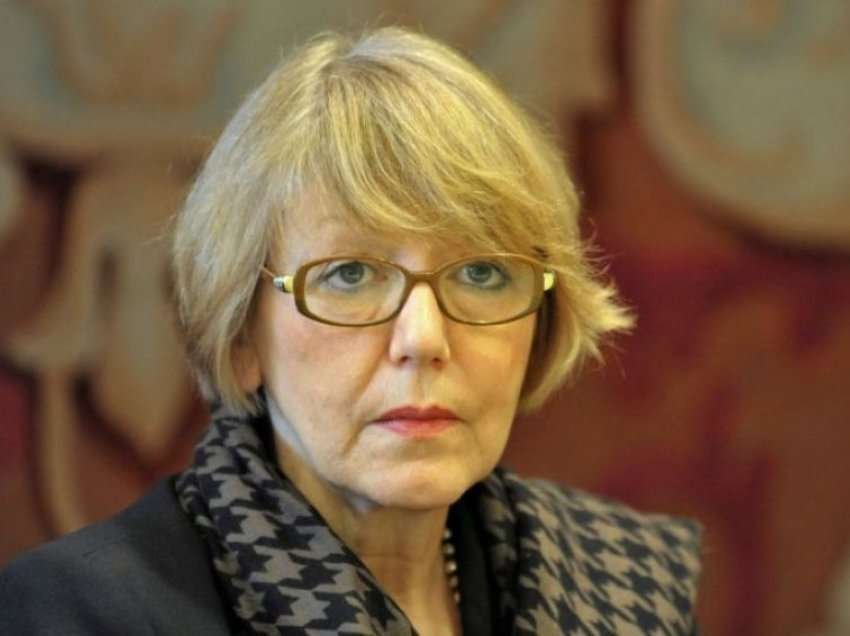
Sonja Biserko, president of the Helsinki Committee for Human Rights in Serbia, has said that the student movement’s electoral victory and the departure of Aleksandar Vučić from power have changed the country’s political atmosphere and raised public expectations. However, she cautioned that meaningful reforms will take time.
Speaking on the Dnevnik D programme of Bosnia and Herzegovina’s Federal Television, Biserko said one of the clearest indicators of a shift in Belgrade’s political direction would be its approach to Bosnia and Herzegovina, particularly its relationship with Republika Srpska leader Milorad Dodik.
According to Biserko, political developments have already triggered changes within Serbian institutions, especially the judiciary, where cases that had been neglected for years are beginning to receive attention.
She warned that efforts to dismantle criminal networks could have consequences beyond Serbia’s borders.
“Organised crime is centred in Belgrade, but it is also connected to the wider region. If these networks are successfully dismantled, the impact could be significant across the region, reaching as far as Slovenia,” Biserko said.
Nevertheless, she urged the public not to expect immediate results from the student movement, pointing out that many of its representatives lack experience in governing.
She said the new political generation should be given time to establish itself, noting that Serbia’s decades-long experience with populism and nationalism cannot be reversed overnight. She described the students’ electoral victory itself as a major development.
Regional policy will be a key test
Discussing Serbia’s future regional policy, Biserko said the new authorities would need to demonstrate whether Belgrade intends to end its practice of exerting political influence over Serbs in neighbouring countries.
A central question, she argued, is whether the concept of the “Serbian World” will continue in some form or whether the new government will abandon it as a guiding political approach.
Biserko said the new leadership would have to convince regional partners that the policy would no longer be pursued by Belgrade.
She also stressed that improving relations between Serbia and Bosnia and Herzegovina would require a fundamental change in the way the Serbian capital communicates with its neighbour.
“Belgrade must, above all, direct its communication towards Sarajevo,” she said, arguing that previous Serbian authorities had prioritised meetings with Dodik and individuals from his political and business circles.
Biserko added that Republika Srpska would not be able to function without Serbia’s financial, political and broader support.
EU, Russia and the legacy of the wars
Biserko believes divisions within the student movement are likely to become more apparent when the new political leadership begins defining its foreign policy priorities. These include relations with the European Union, Russia and neighbouring countries, as well as Serbia’s approach to confronting its past.
She singled out dealing with the legacy of the wars of the 1990s as particularly important, noting that the issue has not yet featured prominently among the student movement’s priorities.
Building the rule of law, she added, would also have significant implications for the wider region.
Asked how Sarajevo should respond to the political changes in Serbia, Biserko said Bosnia and Herzegovina should wait for the formation of the new government and assess its first decisions, while maintaining an active and constructive approach.
She also expressed hope that developments in Serbia could encourage younger generations in Bosnia and Herzegovina to become more politically engaged, arguing that widespread passivity and emigration weaken the prospects for domestic reform.
Biserko concluded that whether Serbia is undergoing a genuine historical shift will depend largely on the new government’s positions on three issues: regional relations, confronting the past and foreign policy.
She said Serbia’s future international positioning would also depend on how the new authorities reassess the country’s traditional foreign policy approach, which she believes has hindered its ability to establish a clearer international position.