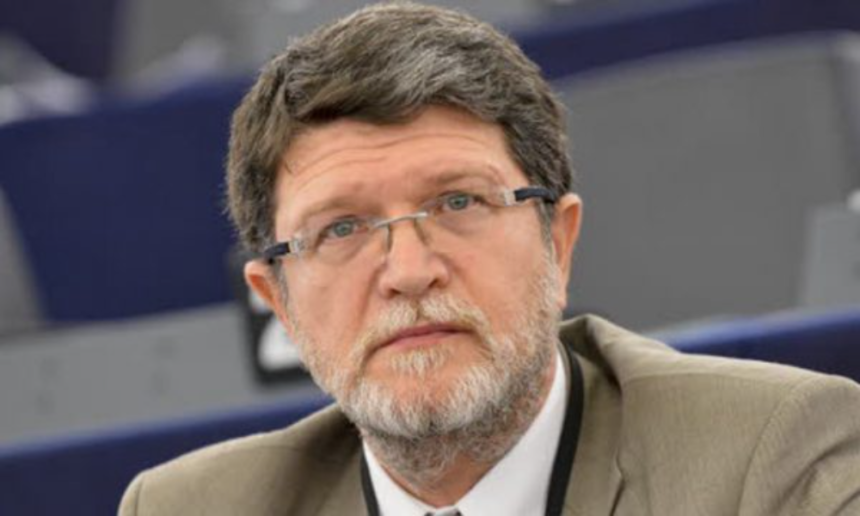
A major political debate has erupted across the Serbian opposition spectrum following a controversial assessment by Tonino Picula, the Croatian Member of the European Parliament (MEP) and newly appointed EP Rapporteur for Serbia.
In an interview with the daily newspaper Danas, Picula stated that three separate Serbias currently exist—distinct societal layers that completely fail to communicate with one another. Picula argued that the lack of a basic national consensus is preventing the country from solving its decades-long structural issues and ultimately freezing its path toward European Union membership.
However, prominent figures within Serbia’s parliamentary opposition largely reject Picula’s tripartite theory, framing the country instead through a harsh, binary lens of total political polarization.
1. The Three Layers: The Socio-Environmental Lens
Among the interviewees, Danijela Nestorović, a Member of Parliament representing Ekološki Ustanak (Ecological Uprising), was the only leader who validated Picula’s perspective, defining the “Three Serbias” through structural socio-economic realities rather than mere political parties.
The Tripartite Breakdown of Serbian Society (Ecological Uprising Model)
┌────────────────────────────────────────────────────────────────────────┐
│                                                                        │
│  [ SERBIA OF THE PRIVILEGED ]                                          │
│  • High-ranking officials, regime-linked tycoons, and ruling elites.   │
│                                                                        │
│  [ SERBIA OF THE SILENCED ]                                            │
│  • Citizens trapped by fear, institutional decay, and media control.   │
│                                                                        │
│  [ SERBIA OF THE DEFIANT ]                                             │
│  • Students, activists, and citizens refusing to remain quiet.         │
│                                                                        │
└────────────────────────────────────────────────────────────────────────┘
Nestorović blamed this fracturing on the complete collapse of public institutions and independent media. However, she suggested a unique path toward unity:
“Perhaps around the protection of water and natural resources, Serbia can once again find a common interest and a common language. We insist that water become a constitutional category to protect it from the commercial interests of big capital and lithium mining.”
2. The Binary Lens: “The State vs. The Mafia”
Centrist and center-left opposition leaders firmly rejected Picula’s nuanced layout, stating that any third category is politically irrelevant. They argue that the country is split strictly down the middle.
The Polarization Matrix (DS & SSP Concept)
                  [ SERBIA'S DEEP SOCIETAL RIFT ]
                                 │
         ┌───────────────────────┴───────────────────────┐
         ▼                                               ▼
[ The Autocratic Regime ]                        [ The Rebel Citizens ]
• Armed with state apparatus                     • Led by university students
• Bound to criminal syndicates                   • Fighting for the rule of law
• Aligned with Chinese/Russian camps             • Aligned with European values
- Srđan Milivojević (President, Demokratska Stranka – DS): Milivojević stated that there is no room for a middle ground. “There are only two relevant sides: on one side is the mafia regime that has usurped the state, and on the other are the rebel citizens led by students. Anything in between is politically irrelevant. The only conversation that makes sense now is a conversation regarding the peaceful transfer of power. The choice is simple—Serbia or the mafia.”
- Janko Veselinović (Presidency Member, Stranka Slobode i Pravde – SSP): Veselinović aligned with the binary view but focused on geopolitical isolation. He argued that the ruling system has forcefully detached Serbia from Europe, turning it into a “province for Chinese mining pits and a Russian political governorate.” For the SSP, the only division that matters is whether a citizen stands for a constitutional European democracy or an autocratic dictatorship.
3. The Right-Wing Backlash: Rejecting External Interference
The right-wing opposition used Picula’s comments to launch a direct counter-attack against both European monitoring mechanisms and regional balancing acts.
| Opposition Representative | Political Affiliation | Stance on Picula’s Remarks |
| Miloš Stanković | Presidency Member, Novi DSS (New Democratic Party of Serbia) | Total Rejection: Classifies Picula’s commentary as uninvited, irrelevant interference in domestic sovereign affairs. |
| On Democratic Pluralism | Autentična Desnica (Authentic Right) Coalition | Assures that authentic dialogue will return naturally once the conservative right assumes power, guided by Serbian legal traditions. |
| Counter-Accusations | Critique of Croatia’s Domestic Landscape | Warns that the real danger is the “dangerous political conformity” in Croatia, alleging that hundreds of thousands ritualistically celebrate Ustaše values at far-right concerts. |
Stanković concluded that Serbia must actively protect itself from the type of uniform political conformity seen in neighboring states, choosing instead to navigate its internal divisions independently of external Western or regional arbitration.