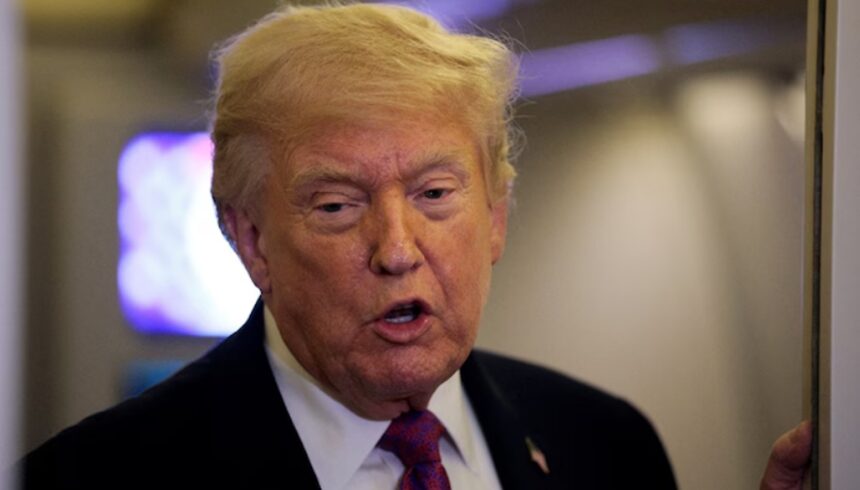
U.S. President Donald Trump has issued a stern warning to Tehran, declaring that the United States “will hit them very hard” following what he described as Iran’s repeated failure to honor diplomatic agreements.
In a telephone interview with Fox News, Trump revealed that the military standoff escalated sharply over the weekend, with the U.S. executing a fresh wave of retaliatory airstrikes against Iranian targets.
“We hit them very hard last night. Every time they send a drone, we hit them very hard,” President Trump stated. “But we had a deal. What nobody knows is that we had a deal. It was a done deal, and then they broke it. They always break it. We’ve had 10 deals with these people, and so we’re just going to hit them very hard.”
U.S. to Become “Guardian” of the Strait of Hormuz
Beyond carrying out fresh military strikes, Trump announced a significant shift in maritime strategy, stating that the United States will effectively assume control as the “guardian” of the vital Strait of Hormuz chokepoint.
However, the U.S. President emphasized that American protection of the global energy shipping route will no longer be free of charge:
- Demanding Reimbursement: Trump declared that he expects financial compensation from international allies and wealthy nations who rely on the waterway for global oil supplies.
- Protecting American Troops: The President justified the demand for payment by highlighting the extreme risks faced by U.S. military personnel deployed to secure the region, stating, “We just want to be reimbursed for all of this, for putting our people in harm’s way.”
Escalation Follows Weekend Airstrikes
The President’s comments coincide with a major surge in U.S. military operations. The Pentagon significantly expanded its air campaign over the weekend, targeting Iranian missile networks, drone launch sites, and naval facilities.
The renewed fighting threatens to completely unravel the fragile interim ceasefire agreement brokered in June, as both Washington and Tehran engage in a fierce struggle for operational control over the world’s most critical maritime oil corridor.