The Turkish Ministry of Foreign Affairs has issued a stern, urgent warning regarding an “uncontrolled escalation” of the ongoing regional conflict, following a targeted drone strike on a Turkish-owned commercial cargo vessel on Thursday evening, May 28, 2026.
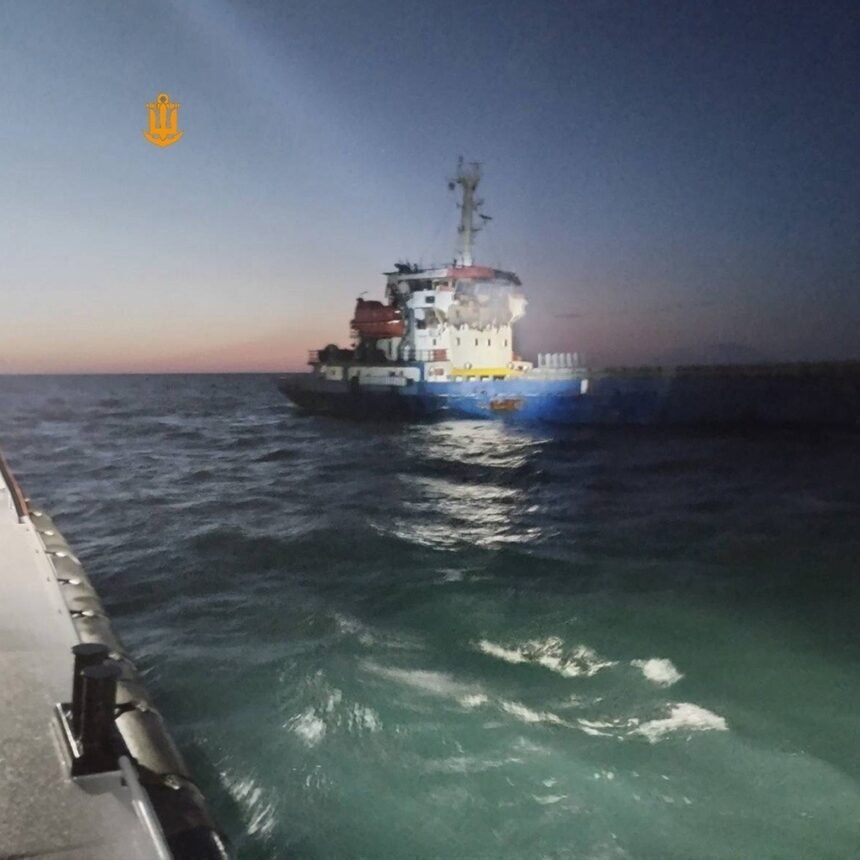
While Ankara chose to maintain diplomatic ambiguity by refusing to explicitly name a perpetrator in its official state communiqué, the Ukrainian Armed Forces immediately moved to identify the attackers, releasing operational footage of the aftermath.
The Incident: Attack on the Cargo Ship ANT
According to statements issued by the Ukrainian Navy, the Turkish-owned commercial vessel, identified as the ANT, was transiting through the established Black Sea maritime export corridor when it was intercepted.
[Black Sea Maritime Corridor Strike]

  [Russian-Controlled Airspace] ──► Russian Kamikaze UAVs Launched
                                             │
                                             ▼
  [Maritime Export Corridor]   ──► Target: Turkish-Owned Cargo Vessel "ANT"
                                             │
                                             ├─► Damage: Significant structural hull trauma
                                             └─► Casualties: Two crew members wounded
Ukrainian military intelligence reports that one or more Russian Unmanned Aerial Vehicles (UAVs)—commonly referred to as kamikaze drones—struck the ship directly. Footage published by the Ukrainian Navy appears to corroborate the report, showing thick plumes of dark smoke billowing from the midsection of the merchant vessel following the impact.
Emergency maritime services confirmed that while the ship suffered significant structural hull trauma, it remained afloat. At least two crew members were wounded in the blast and received immediate medical triage.
Ankara’s Delicate Diplomatic Tightrope
The strike places Turkey in an incredibly volatile position. As a key NATO member that controls access to the Black Sea via the Bosporus and Dardanelles Straits under the Montreux Convention, Turkey has consistently attempted to position itself as a neutral mediator between Moscow and Kyiv.
| Diplomatic & Operational Realities | Description |
| Ankara’s Calculated Silence | By intentionally omitting Russia’s name from the official Foreign Ministry press release, Turkey is attempting to prevent a direct, public diplomatic crisis with the Kremlin while preserving its role as a potential peace broker. |
| The Export Corridor Threat | The attack directly threatens the safety of international merchant shipping lanes in the western Black Sea. If civilian crews refuse to sail due to drone threats, it could effectively choke off agricultural and grain exports traveling from Ukrainian ports toward global markets. |
| The Warning | The Turkish Foreign Ministry closed its statement by issuing a stern directive to “all active parties” to immediately cease aggressive maritime maneuvers that could spiral into a broader, unmanageable theater of war. |
This high-seas escalation occurs at a highly sensitive time for regional security, coming just 24 hours after NATO completed its first-ever joint tactical military exercises with Serbia, signaling a massive push by Western allies to secure logistical stability across Southeastern Europe.