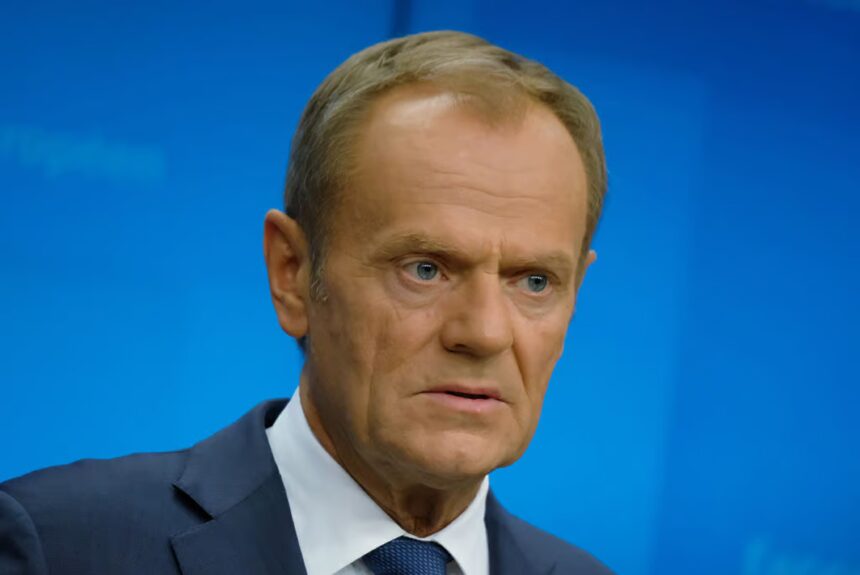
Polish Prime Minister Donald Tusk has delivered a sharp diplomatic warning to Western European allies, declaring that Warsaw will fundamentally refuse to honor any future peace agreements regarding Ukraine if Poland is excluded from the negotiating table.
Tusk’s remarks highlight growing friction over the exclusive “E3” diplomatic format, which features Germany, France, and Great Britain holding high-level consultations with Ukraine while bypassing frontline NATO and European Union allies.
The London Summit and the E3 Exclusion
The diplomatic row erupted following a closed-door summit held in London on Sunday, June 7, 2026. The meeting brought together several major European leaders to establish a unified continental position ahead of eventual peace negotiations with Russia:
The Exclusive E3 Negotiating Pipeline (London Summit)
[ Germany: Chancellor Merz ]
[ France: President Macron  ] ──► [ Joint European Position ] ──► [ Ukraine: President Zelensky ]
[ UK: Prime Minister Starmer]
                                           │
                                           ▼ (Bypassed Frontline Ally)
                                   [ Poland (Donald Tusk) ]
                                           │
                                           ▼
                            "Warsaw will NOT respect agreements
                             concluded in our absence."
Following a subsequent briefing by German Chancellor Friedrich Merz, Tusk made his position clear to both Berlin and the broader international community through Poland’s PAP news agency.
“I have stated clearly that, from the Polish perspective, any agreements made without Poland’s involvement will simply not be respected by us,” Tusk asserted. “Poland is an absolutely indispensable link if we are to speak seriously about the future of Ukraine and the entire region.”
Frustration Spreads Beyond Warsaw: The E5 Push
Tusk revealed that Poland is not alone in its frustration with the E3’s exclusive diplomatic steering wheel. Italian Prime Minister Giorgia Meloni has similarly expressed deep dissatisfaction with the format.
To counteract this centralization of power, Tusk indicated that talks are underway to expand the group into an “E5” format, which would formally integrate Poland and Italy. However, the Polish Prime Minister conceded that expanding the roster is a delicate balancing act, as inviting more nations could over-complicate the negotiations and slow down critical decision-making.
| Negotiating Format | Included Countries | Core Strategic Critique |
| The “E3” Core | Germany, France, United Kingdom | Accused of bypassing the frontline neighboring states that carry the highest logistical and security burdens of the war. Completely sidelines critical Nordic financial and military donors (Finland, Sweden, Denmark, Norway). |
| The Proposed “E5” | Germany, France, United Kingdom, Poland, Italy | Offers a more balanced representation of EU economic weight and geographic proximity, but risks gridlocking the process as more member states demand a seat at the table. |
Poland’s Strategic Stature vs. Domestic Political Gridlock
Poland’s claim to a seat at the negotiating table is backed by concrete geopolitical reality: it shares a massive border with Ukraine, acts as the primary transit hub for nearly all Western military aid, and serves as the foundational anchor of NATO’s eastern flank.
Despite its external geopolitical importance, Warsaw’s international leverage is currently being undermined by a bitter domestic political feud. A constitutional standoff between President Karol Nawrocki and Prime Minister Donald Tusk’s government over who holds the legitimate right to represent Poland on the world stage has muddled the nation’s diplomatic messaging, leaving a power vacuum that Western allies are exploiting to dictate terms from London and Berlin.