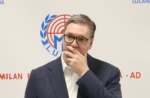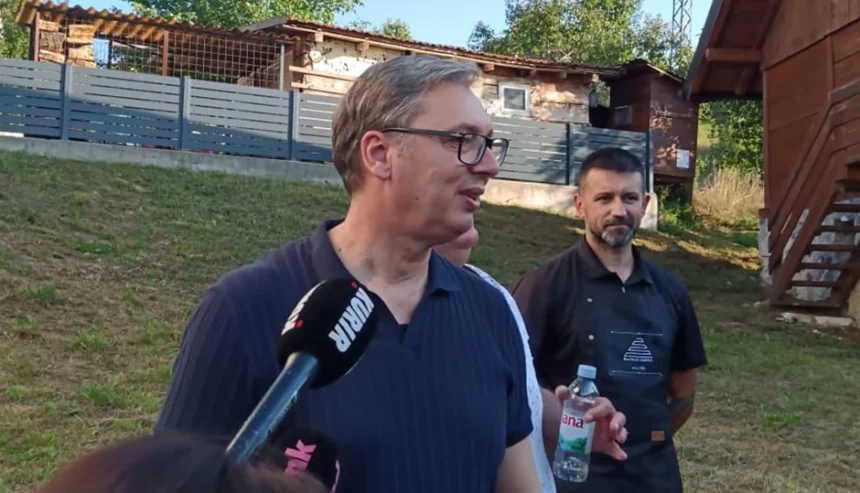
Serbian President Aleksandar Vučić used a visit to his renovated family home in Čipuljić, near Bugojno in Bosnia and Herzegovina, to emphasize his ties with Republika Srpska, discuss Serbia’s regional policy, and defend Belgrade’s stance on Kosovo.
During the gathering with residents, Serbian officials and political allies, including Republika Srpska President Milorad Dodik and Democratic People’s Party leader Milan Knežević, Vučić said Serbia would continue supporting Republika Srpska while respecting the Dayton Peace Agreement.
“We will always be with Republika Srpska, we will always respect the Dayton Agreement, and we will always seek and preserve peace,” Vučić said.
Speaking about Kosovo, Vučić questioned why Montenegro recognized Kosovo’s independence while Republika Srpska, as an entity within Bosnia and Herzegovina, did not.
“If it is considered normal that Republika Srpska did not recognize Kosovo, then why did Montenegro do it?” Vučić said, arguing that Serbia has reasons to express gratitude toward Republika Srpska for its position on Kosovo.
He also said Serbia would continue to provide political and economic support to Republika Srpska, describing it as a “shield” against possible pressure on the entity.
During the event in Čipuljić, Vučić spoke about his childhood memories and the reconstruction of the family property, which he said had been destroyed during the war. He said he was pleased that both Serbs and members of other communities attended the gathering.
“My father rebuilt the house. I am happy that I could be here with neighbors, Serbs and Bosniaks, and even two Croats came. I am proud that we have preserved our roots and traditions,” Vučić said.
The Serbian president also addressed upcoming elections in Serbia, describing them as “decisive” and claiming that citizens understand their importance. He criticized opposition groups and said the ruling authorities had achieved significant results during the previous years.
Discussing economic issues, Vučić said inflation had been reduced but warned that economic challenges required continued attention.
“Inflation is like cancer; even when you manage to stop it, you must continue to monitor it,” he said.
The visit to Čipuljić came amid continued regional tensions over Kosovo, the status of Republika Srpska, and competing narratives about the legacy of the wars of the 1990s. Vučić’s remarks again placed Kosovo and relations with Serbs outside Serbia at the center of his political messaging.