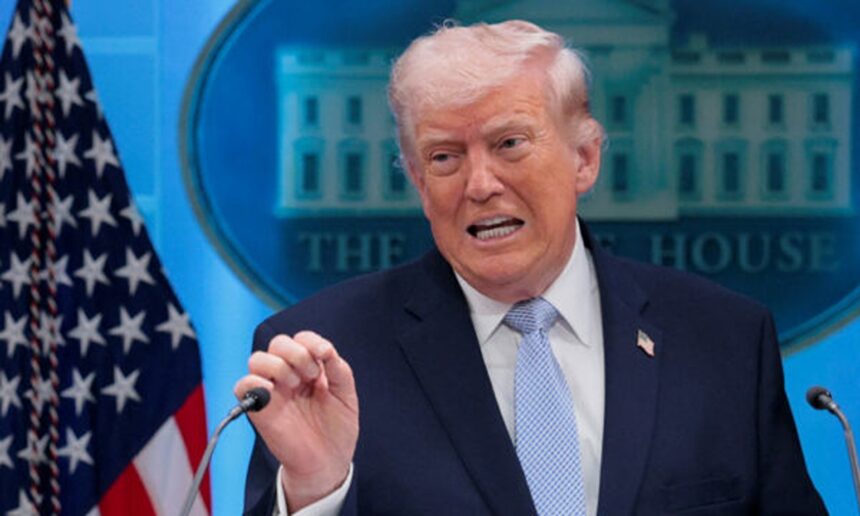
During a recent speech in Las Vegas, Donald Trump claimed that Iran had agreed not to pursue nuclear weapons and to hand over its “nuclear dust” — a term he used to describe Iran’s stockpile of highly enriched uranium.
The problem? “Nuclear dust” is not a recognized term in nuclear science. Experts say this kind of wording creates confusion and suggests a lack of technical precision when discussing such a sensitive issue.
What is enriched uranium?
Uranium is a naturally occurring element found in the Earth’s crust. However, most of it (about 99%) is the isotope uranium-238, which is not ideal for sustaining a nuclear chain reaction.
The key isotope is uranium-235, which can split (fission) more easily and sustain a chain reaction — the fundamental process behind both nuclear power and nuclear weapons.
To make uranium usable, it must go through a process called Uranium enrichment, where the proportion of uranium-235 is increased.
- Low enrichment (3–5%) → used for nuclear power plants
- High enrichment (90% or more) → weapons-grade material
Why does it matter?
Since the U.S. withdrawal from the Joint Comprehensive Plan of Action during Trump’s first term, Iran has steadily increased its uranium enrichment levels, bringing it closer to weapons-grade capability.
Statements by figures like Steve Witkoff and others involved in negotiations have raised concerns among experts about the level of technical understanding in these discussions.
Bottom line
“Nuclear dust” is not a real scientific term — it likely refers loosely to enriched uranium. But in nuclear diplomacy, precision matters. Misunderstanding or oversimplifying terms like enrichment can lead to confusion about what is actually being negotiated and how close a country may be to developing nuclear weapons.