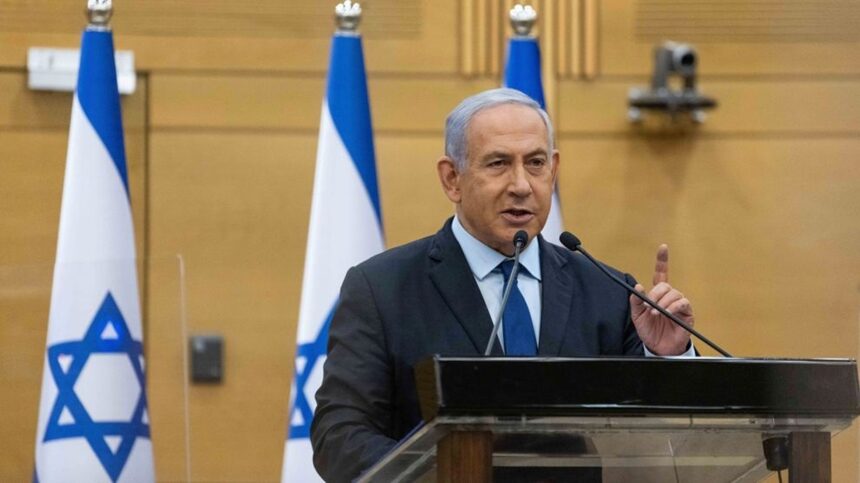
According to a report by the The Washington Post, U.S. intelligence agencies have warned that Israeli Prime Minister Benjamin Netanyahu may take actions that could jeopardize Washington’s efforts to secure a long-term peace agreement with Iran.
The report, citing current and former U.S. officials, states that intelligence assessments suggest Israel remains determined to continue its military operations against Hezbollah in Lebanon despite the recently announced ceasefire. Such a move could significantly strain the already fragile relationship between the United States and Iran, as Tehran has reportedly demanded a complete halt to hostilities in Lebanon as a condition for further diplomatic progress.
According to the assessment, any escalation of Israeli military actions in Lebanon could threaten the framework of the U.S.–Iran agreement and potentially create tensions between Netanyahu and U.S. President Donald Trump, whose relationship has played an important role in regional politics.
During the recent G7 Summit in France, Trump acknowledged a “small disagreement” with Netanyahu regarding Lebanon, saying he had urged the Israeli leader not to “bring down a building every time a Hezbollah member walks in.”
The report also notes that Netanyahu’s political future may be closely linked to continuing military pressure on Hezbollah, particularly with Israeli elections approaching. Any reduction in military operations could be portrayed by opponents as a sign of weakness.
At the same time, Israeli officials are said to be dissatisfied with elements of the U.S.–Iran agreements, arguing that they weaken the policy of maximum pressure on Tehran. U.S. officials, however, continue to emphasize that their priority is finalizing the agreement and preventing a broader regional crisis.
Within Israel, public opinion reportedly remains largely supportive of continued operations against Hezbollah, while analysts warn that any withdrawal could be interpreted domestically as a political defeat.
The report concludes that even without further escalation, the continued presence of Israeli forces in southern Lebanon remains a destabilizing factor that increases the risk of renewed clashes in the region.