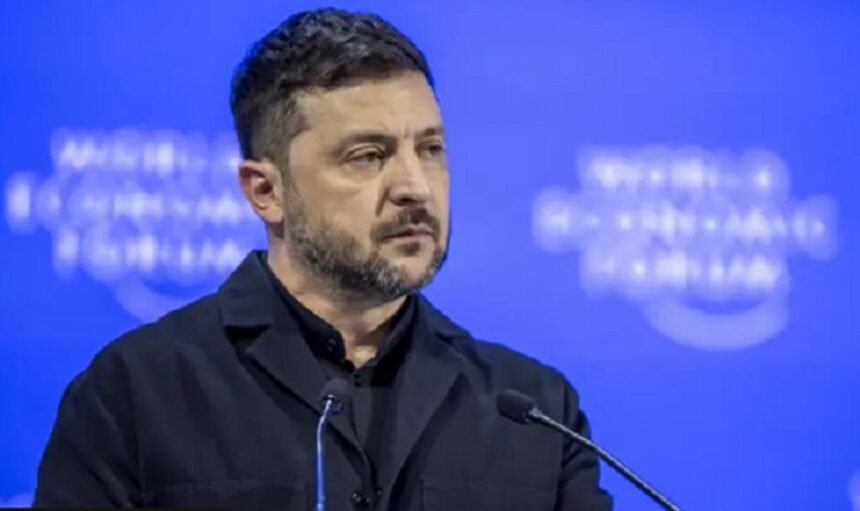
Ukrainian President Volodymyr Zelenskyy is expected to make his first official visit to Serbia on Saturday, in a politically sensitive move that highlights Belgrade’s increasingly delicate balancing act between its traditional ties with Moscow and its aspirations for European Union membership.
The visit was announced late Thursday by the office of Serbian President Aleksandar Vučić, although Zelenskyy’s office had not officially confirmed the trip as of Friday.
Serbia is one of the few European countries that has maintained close relations with Russia following Moscow’s full-scale invasion of Ukraine in 2022. Vučić has repeatedly refused to join international sanctions against Russia, citing Serbia’s historic, political and cultural ties with Moscow.
At the same time, Belgrade is formally pursuing EU membership and has sought to strengthen relations with Kyiv and Western governments.
Ahead of Zelenskyy’s expected arrival, Vučić said the two presidents would discuss economic and other forms of bilateral cooperation, as well as the European integration paths of Serbia and Ukraine.
“As far as sanctions are concerned, let me tell you directly: Serbia has established its policy,” Vučić said Friday, stressing that Belgrade’s position had “not changed” and would remain unchanged for the time being.
Serbia relies heavily on Russia for its energy supplies, while its EU accession process has faced growing obstacles amid concerns over Belgrade’s foreign policy, democratic standards and continued ties with Moscow.
Despite refusing to impose sanctions, Serbia has provided assistance to Ukraine and has increased contacts with Kyiv in recent months. Belgrade has also pledged to participate in Ukraine’s postwar reconstruction.
Russia has previously accused Serbia of indirectly supplying weapons and ammunition to Ukraine through NATO member states, describing the alleged transfers as a “stab in the back.” Belgrade has maintained that it has not directly sold weapons to Ukraine.
The planned visit is therefore likely to carry significance well beyond bilateral relations.
Djordje Vlajić, a senior editor at the independent Fonet news agency in Belgrade, said both leaders could benefit politically from the meeting.
Zelenskyy, he argued, could use the visit to signal to Moscow that Ukraine is strengthening relations with one of Russia’s key partners in the Balkans. Vučić, meanwhile, could use the meeting to demonstrate to Brussels that Serbia remains engaged with European positions on the war despite its refusal to sanction Russia.
“Zelenskyy is sending a message to Russia that he is taking over its key allies in the Balkans,” Vlajić said.
For Vučić, he added, the visit could help “keep the link alive with the EU” and send Brussels a signal regarding Serbia’s position on the war.
The Serbian president has met Zelenskyy several times since Russia launched its full-scale invasion. Vučić has also traveled to Ukraine twice for summits focused on European support for Kyiv, but on both occasions stopped short of signing joint declarations calling for tougher sanctions against Moscow.
The EU has increasingly linked Serbia’s progress toward membership to its foreign-policy alignment with the bloc, while Belgrade has also faced criticism over democratic backsliding under Vučić and a year of youth-led protests following the deadly 2024 Novi Sad railway station disaster.
Against that backdrop, Zelenskyy’s visit could become an important diplomatic test for Serbia.
For Kyiv, closer engagement with Belgrade would provide an opportunity to challenge Moscow’s influence in the Balkans. For Vučić, hosting Zelenskyy offers a way to demonstrate diplomatic flexibility while maintaining that Serbia has no intention of abandoning its policy toward Russia.
The visit could therefore reinforce Serbia’s role as a bridge between competing geopolitical blocs — but also expose the growing contradictions between Belgrade’s European ambitions and its continued strategic relationship with Moscow.