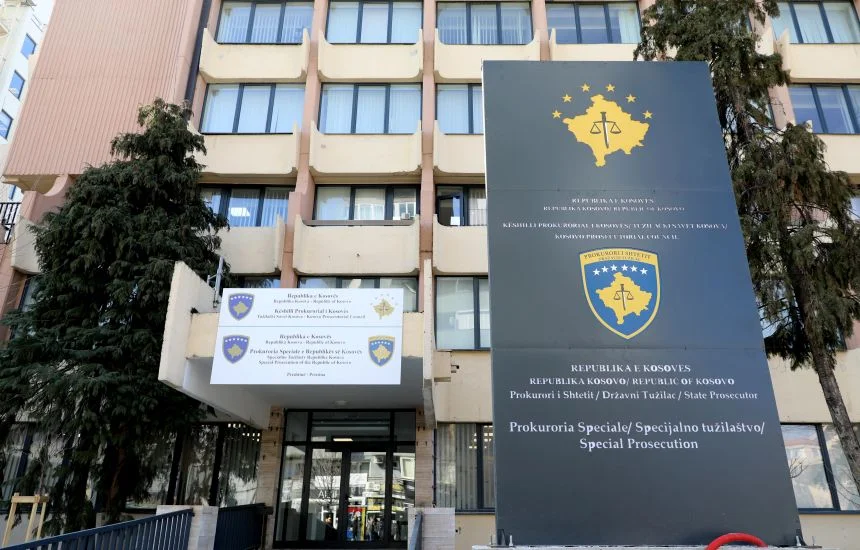
Kosovo’s Special Prosecutor’s Office has indicted 20 Serbian nationals in absentia over alleged war crimes committed in Gjakova in May 1999, including the killing of 107 Albanian civilians, looting, unlawful detention, forced expulsions and the deliberate destruction of homes.
The indictment, obtained by KOHA, provides detailed accounts of a three-day operation by Serbian forces in Gjakova during May 1999. Among those charged is Milan Radoičić, whom Kosovo authorities identify as the main suspect in the 2023 Banjska attack.
According to the indictment, Serbian forces, wearing uniforms and armed with various weapons, allegedly beat and mistreated Albanian civilians before killing them at a location known as Taliq’s Bridge.
The prosecution alleges that civilians were forced at gunpoint to move through the city, including streets, homes and courtyards, before being taken toward Taliq’s Bridge. Many were allegedly killed during the operation.
Some victims were buried in Gjakova’s city cemetery, while others were allegedly transported to Serbia and later discovered in mass graves at Batajnica, near Belgrade. The indictment describes this as evidence of an organized and systematic effort to conceal crimes committed against the civilian population.
The prosecution further alleges that Serbian forces separated women and children from men and detained more than 300 Albanian civilians in prisons and makeshift detention facilities.
According to the indictment, detainees were held in “inhumane and degrading conditions,” without adequate food, basic hygiene or medical care. Some were initially detained in Kosovo before being transferred to prisons in Serbia, where they remained until after the end of the war.
The indictment also details allegations of systematic looting. Women were allegedly robbed of gold jewelry, money and other valuables before being expelled from their homes.
The prosecution alleges that men were subjected to identity checks, with some subsequently executed in their homes and courtyards, while others were arrested and imprisoned. Women and children were allegedly forced at gunpoint to leave their homes and join refugee columns heading toward Albania.
The Special Prosecutor’s Office also alleges that the defendants deliberately set fire to homes belonging to several families in Gjakova in an effort to destroy evidence of the crimes and facilitate the ethnic cleansing of the area.
The 20 defendants are being prosecuted in absentia.
The case represents another significant war-crimes prosecution related to the 1998–1999 Kosovo war, while the inclusion of Radoičić connects the proceedings to a figure who remains a prominent and controversial name in Kosovo-Serbia relations.