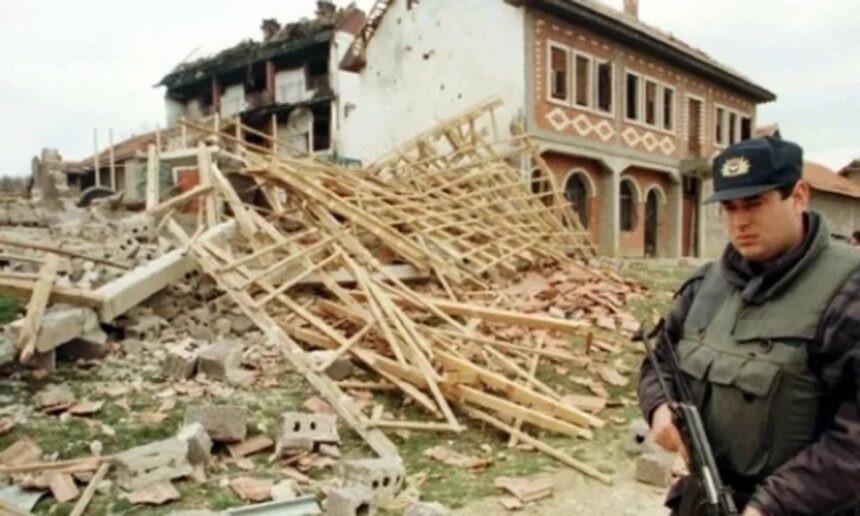
Kosovo’s Special Prosecutor’s Office has identified 35 members of Serbia’s Special Police units allegedly involved in the attack on the Jashari family in Prekaz, prosecutor Valdet Gashi has revealed.
Speaking about the investigation, Gashi described the case as highly complex and challenging, but said intensive work by the Special Prosecutor’s Office, together with Kosovo Police and other institutions, had resulted in the filing of an indictment.
“It was a very complex and challenging case, but thanks to the intensive work of the Special Prosecutor’s Office and close cooperation with the Police and other institutions, we have reached this stage the filing of the indictment,” Gashi said.
According to the prosecutor, investigators have gathered material and personal evidence which they say establishes a well-founded suspicion that the suspects committed war crimes against the civilian population.
The investigation identified 35 defendants, all allegedly belonging to the command structures of Serbia’s Special Police units.
“Based on the evidence secured, we have established a well-founded suspicion that the suspects in this case committed war crimes against the civilian population,” Gashi said.
He added that investigators had established which units participated in the attack, the weapons and arsenal used, and the consequences of the operation.
The prosecutor said that 26 people were killed in the attack, including children as young as five or six years old.
The findings mark a significant development in one of the most sensitive war-crimes cases from the 1998 Kosovo war.
The Jashari family compound in Prekaz became the scene of a deadly assault in March 1998, when Serbian forces attacked the family compound. The killings of members of the Jashari family, including women and children, became one of the defining episodes of the Kosovo war and a major turning point in the armed conflict.
For more than two decades, questions over accountability for those involved in the operation have remained unresolved.
The latest investigation seeks to move responsibility from the realm of historical testimony into a formal judicial process — identifying specific units, command structures and individuals allegedly connected to the operation.
The indictment does not itself establish guilt. The allegations against the defendants will have to be examined through judicial proceedings, where individual criminal responsibility must be established in accordance with the law.
But the identification of 35 alleged members of Serbia’s Special Police structures represents a major step in Kosovo’s effort to pursue accountability for crimes committed against civilians during the war.
Decades later, the search for those responsible for Prekaz is moving from unanswered questions toward evidence, names and accountability.