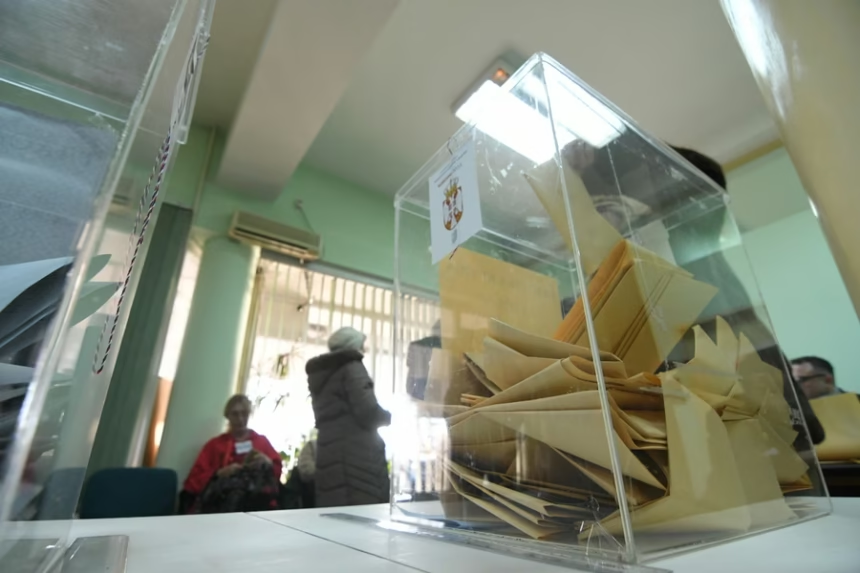
Ahead of the local elections scheduled for March 29, 2026, CRTA has revealed at least 12 fake electoral lists linked to the ruling Srpska napredna stranka (SNS), with suspicions of four more. The lists appear across 10 municipalities and aim to manipulate the vote while creating a false sense of political pluralism, according to Raša Nedeljkov, CRTA’s program director.
“These options simply appear out of nowhere, often garner fewer votes than the signatures they collected for registration. You also see lists of national minorities in areas with no such populations,” Nedeljkov told Nova.
How Fake Lists Are Identified
CRTA examines past electoral history, public activity, and organizational presence. Lists are flagged if they:
- Lack prior political activity or visible infrastructure.
- Collected candidate signatures in a manner that went unnoticed publicly, suggesting involvement from SNS.
- Use misleading names to confuse voters, such as including “students” in lists unrelated to student movements.
“These lists serve to mislead voters, siphon votes from genuine opposition, and secure SNS majorities in election commissions and polling stations,” Nedeljkov explained.
Electoral Manipulation and the Role of Officials
CRTA also highlighted widespread use of state resources in campaigning, including high-ranking officials visiting municipalities to indirectly promote SNS. Over 70 visits were recorded in early March alone, often framing state-funded projects as party achievements.
“The ruling coalition runs local campaigns under the president’s name, blurring the line between the state and party. This is precisely the criticism repeatedly raised by ODIHR in Serbia,” Nedeljkov said.
Voting Irregularities
The NGO warned of potential misuse of mail-in and at-home voting, stressing that while these votes remain secret, careful preparation of polling station monitors is crucial. CRTA recommends having well-trained opposition observers at every polling station to protect electoral integrity.
“This is not about one day of voting—it’s about the entire system being prepared to prevent subtle manipulations that undermine democracy,” Nedeljkov added.