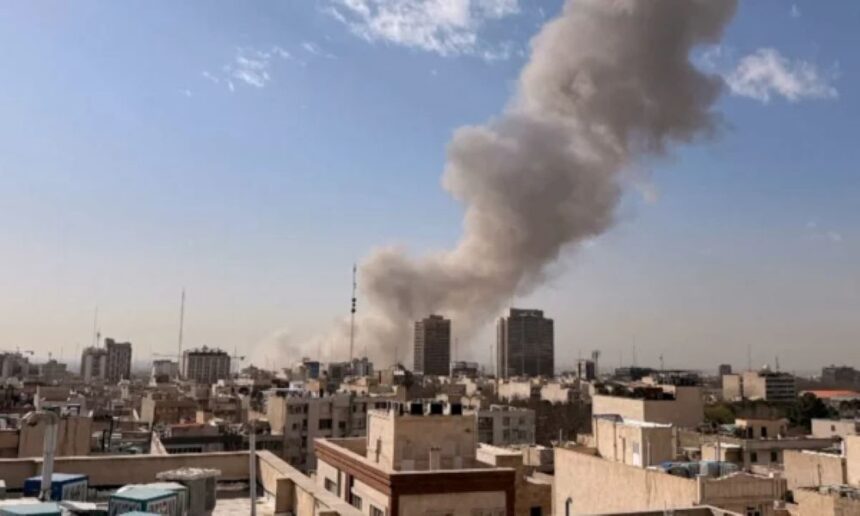
European leaders, while refusing to join direct strikes against Iran, have responded to the escalating conflict in the Middle East by deploying warships, fighter jets, and air defense systems to protect bases and allies in the region. However, officials and analysts say this show of force—one of Europe’s largest military mobilizations in recent years—has exposed the limits of the continent’s defensive capabilities.
This deployment is seen as the first major test of Europe’s military strength since former U.S. President Donald Trump pressured European allies to increase defense spending, troop numbers, and responsibilities for their own security. Experts note that Europe’s rearmament and recruitment efforts remain in early stages after decades of relying heavily on U.S. military power.
Strains on Other Fronts
The recent deployments have complicated Europe’s ability to maintain forces elsewhere, such as in the Baltic Sea, where European nations had planned a show of force against Russia. Additionally, sending materials and munitions to Gulf allies is affecting Europe’s capacity to support Ukraine in its ongoing fight against Moscow. “We are very fragile in terms of war,” Italian Senator Carlo Calenda said, warning that these pressures could impact European defense at home.
France and the UK Face Limits
France has deployed more than half of its naval fleet to the Mediterranean and the Persian Gulf, including its nuclear aircraft carrier, forcing reductions in operations elsewhere. Meanwhile, the UK faced administrative delays that postponed the deployment of a destroyer to Cyprus by a week, following an Iranian drone strike on a British airbase. London also sent four fighter jets armed with missiles, four helicopters, and counter-drone systems to protect Gulf bases, and allowed U.S. bombers to launch defensive strikes from British territory. However, the Royal United Services Institute noted that the UK’s contribution to regional air defense is relatively limited compared to the efforts of the U.S. and Israel.
Italy Under Pressure
Italy deployed a frigate to protect Cyprus and supplied Gulf allies with Stinger missiles, anti-drone artillery, and other defense systems. Italian Defense Minister Guido Crosetto asked domestic defense companies to mobilize all available resources to support Gulf nations.
But these decisions have significantly reduced Italy’s own arsenal. Senator Calenda noted that one of Italy’s three operational SAMP/T air defense batteries has been shifted from the Baltic region to the Middle East, leaving only one battery at home. “Our capabilities are very low at the moment,” he said, highlighting that interceptor missile production remains limited.
Impact on Ukraine
The Middle East war is also putting pressure on global supplies of interceptor missiles used to shoot down drones and rockets. European officials are concerned that deliveries to Gulf allies may reduce reserves available for Ukraine.
Ukrainian President Volodymyr Zelensky said Kyiv has sent a drone expert team and Defense Minister Rustem Umerov to Gulf states to help counter Iranian drones, leveraging experience gained from fighting Russia. Meanwhile, Polish Foreign Minister Radosław Sikorski stated that Poland will not contribute to Europe’s military reinforcement in the Middle East, noting, “We currently have a war at our borders.” Analysts warn that the current mobilization highlights Europe’s longstanding gaps in military capability, which have remained unaddressed for many years.