Kosovo Prime Minister Albin Kurti stated that the Law on Foreigners entered into force 13 years ago and that the Government is simply implementing it.
Kurti emphasized that the goal is to incorporate all structures within the framework of legality and constitutionality, assuring that neither Serb patients nor students will be left without services.
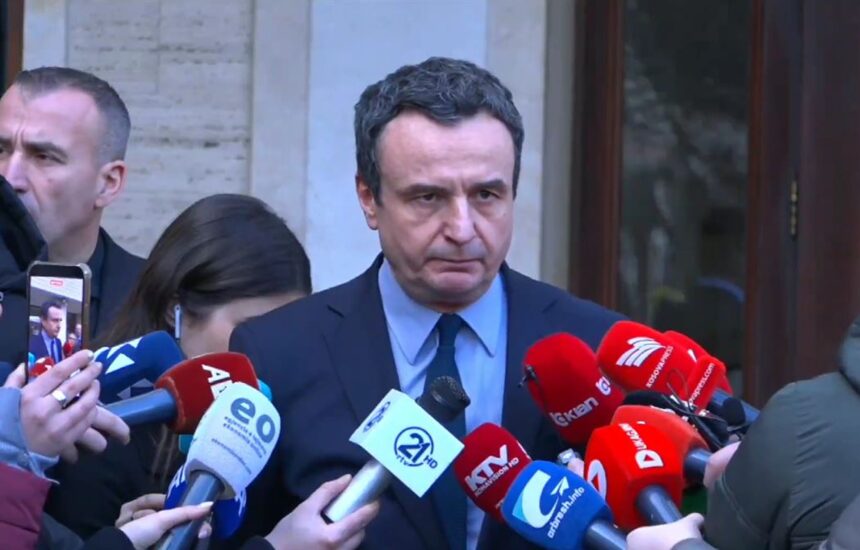
“We are merely implementing a law from 13 years ago. And finally, the law is being enforced. We will incorporate all structures that are part of the healthcare and education systems. You know that other illegal Serbian structures, such as those in security, finance, and administration, no longer exist in the Republic of Kosovo; only education and healthcare remain. We will incorporate them, but to do this, it is necessary first to have a list of all teachers, doctors, and nurses working in these structures within the education system,” Kurti said in a statement to the media after the inauguration of the Vushtrri–Prishtina road segment.
He stressed that the process will be carried out legally and within set deadlines for obtaining documents of the Republic of Kosovo.
“We do not want Serb patients to be left without healthcare. We do not want Serb students to be left without education. But this must be done legally. And legally means within the constitutionality and legality of the Republic of Kosovo, and in this regard we are working by providing a twelve-month window, respectively a three-month period for residence, then for work and for obtaining documents of the Republic of Kosovo. You know that we have given similar deadlines in the case of vehicle license plates, therefore everything is going as best as possible, and this is not a political action, this is implementation of the law, gradual implementation in cooperation with the European Union so that in Kosovo we have legalization, normalization, and investment, for all citizens without distinction,” Kurti stated.
The Government agreed last weekend that the implementation of the Law on Foreigners and the law on vehicles will begin with facilitations for Serbs working in parallel institutions or studying at the university in the north.
At the request of the European Union, which sent its special envoy for dialogue, Peter Sorensen, to Kosovo on this issue, Kosovo agreed to issue 12-month residence permits to Serb students who do not have Kosovo documents and to accept identification documents issued by illegal structures for an additional three months. The decision triggered reactions from the opposition but was welcomed by ambassadors accredited in Kosovo.