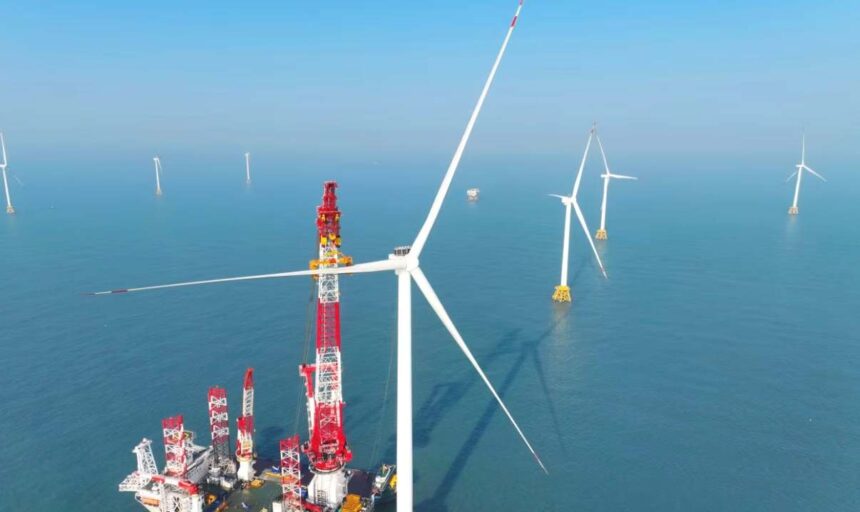
For over a decade, President Xi Jinping has steered a transformation of the Chinese economy with a singular objective: achieving energy security. According to a recent analysis by CNN, this vision has fostered a renewable energy revolution across wind, solar, and hydroelectric sectors, alongside aggressive domestic oil exploration and strategic international partnerships. These efforts were designed specifically to shield the nation from external shocks and reduce reliance on imported fuels.
China currently dominates the global landscape in green technology. The world’s second-largest economy operates three times more wind and solar capacity than the United States and India combined.
Global Wind and Solar Operational Capacity (in Gigawatts)
| Country/Region | Operational Capacity (GW) |
| China | 1,529 |
| United States | 292 |
| Germany | 150 |
| India | 137 |
| Spain | 65 |
Resilience Amidst Regional Conflict
The historic oil crisis triggered by the conflict involving the United States, Israel, and Iran is providing a rigorous test for China’s self-sufficiency. Current data suggests that China is passing this test more comfortably than its neighbors.
While many fuel-starved Asian nations are scrambling to secure energy supplies, China—despite being the world’s largest energy importer—remains insulated due to several key factors:
- Strategic Reserves: China has maintained massive stockpiles of crude oil.
- Domestic Industrial Power: Much of China’s heavy industry operates on domestically produced energy sources.
- Electric Vehicle Adoption: A significant and growing portion of the Chinese automotive fleet is powered by electricity rather than traditional liquid fuels.
Dominance in Green Technology
China’s resilience is further bolstered by its near-monopoly on the production of green technology. The country accounts for the vast majority of global manufacturing capacity for solar panels, wind turbines, and rechargeable batteries. By controlling the supply chain of the “energy of the future,” China is not only protecting its own economy from oil volatility but also positioning itself as the primary provider for the rest of the world’s energy transition.