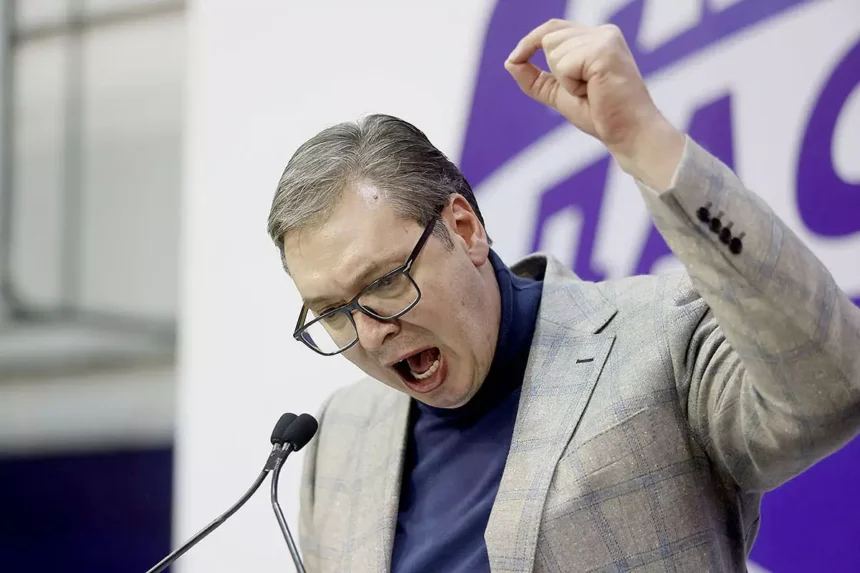
The diplomatic landscape for Serbia is undergoing a profound transformation as President Aleksandar Vučić faces a “perfect storm” of regional shifts and international pressure. Long defined by a strategy of balancing between the West and the East, Belgrade’s foreign policy is now being tested by the fall of key allies and stern ultimatums from Brussels.
The End of the “Hungarian Shield”
The most significant regional development is the departure of Viktor Orbán after 16 years in power. Orbán was more than just a neighbor to Vučić; he was a strategic ideological partner who often acted as a buffer for Serbia within the European Union.
- The Magyar Effect: The victory of Péter Magyar on April 13, 2026, has stripped Vučić of his closest ally. Experts suggest that while Orbán’s exit eases consensus-building within the EU, it leaves Serbia’s leadership “disappointed and exposed.”
- A New Mirror: While the “Hungarian Scenario” (defeating an autocrat at the ballot box) haunts Belgrade, diplomats like Zoran Milivojević argue the situations differ because Serbia faces unique challenges regarding territorial integrity (Kosovo) and lacks a singular opposition leader comparable to Magyar.
Brussels and the “Financial Guillotine”
Serbia is currently facing the real threat of losing €1.5 billion from the EU Growth Plan for the Western Balkans. The European Commission has warned that recent judicial reforms in Serbia do not meet democratic standards.
- Judicial Independence: The EU asserts that new laws enacted in January undermine the autonomy of prosecutors and the independence of the judiciary.
- The Venice Commission: In a move to salvage the funds, Assembly Speaker Ana Brnabić has requested an opinion from the Venice Commission. Vučić has signaled that Serbia will respect their findings, a rare concession driven by the risk of total financial isolation.
The U.S. and Russia: The Energy Dilemma
Belgrade’s relations with Washington and Moscow are increasingly dominated by the fate of NIS (Petroleum Industry of Serbia).
- The NIS Sale: To escape U.S. sanctions imposed due to Russian ownership, Belgrade is negotiating with Moscow to sell Russia’s 56% stake in NIS to the Hungarian energy giant MOL.
- Washington’s Cold Shoulder: Despite initial euphoria in Belgrade following Donald Trump’s re-election, analysts like Jelica Minić suggest the relationship has soured. Serbia remains hit by high U.S. tariffs (35% on exports) aimed at reducing the American trade deficit.
- The Gas Deadline: While Putin recently agreed to remain Serbia’s primary gas supplier for a three-month buffer, the EU expects Serbia to be 100% independent of Russian gas by January 2028.
Freedom and Democracy in Decline
Internal pressures are mounting as international observers document a sharp decline in civil liberties. In March 2026, Freedom House identified Serbia as one of the countries with the most significant drop in freedom globally, maintaining its status as only “partly free.”
“The regime is using the U.S. against the EU. We can only hope that the EU steps forward as the true protector of human rights and democratic values.” — Eric Gordy, University College London.
As the “Orbán era” ends and Brussels tightens the purse strings, Vučić’s decade-long “balancing act” appears to be reaching its structural limits, forcing Belgrade toward a difficult choice between genuine reform and increasing international distancing.