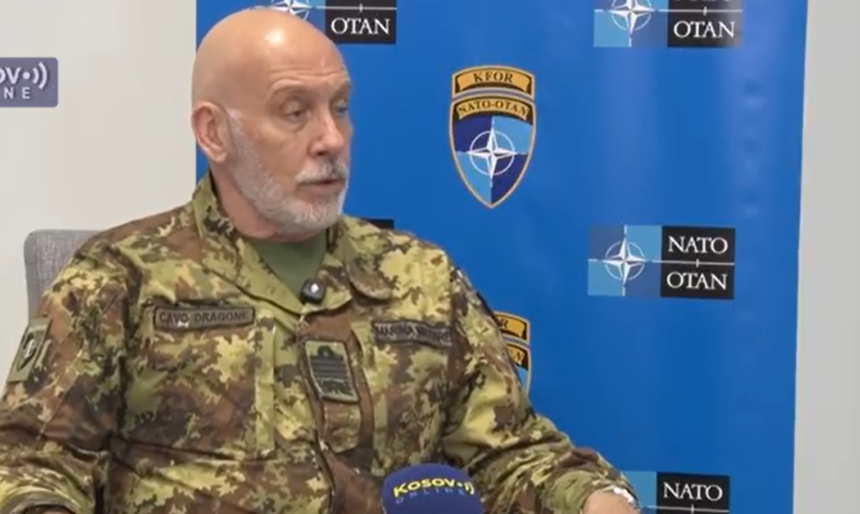
The stability of the Western Balkans remains a strategic priority for NATO, according to Admiral Giuseppe Cavo Dragone, Chair of the NATO Military Committee. Speaking to Kosovo Online, the Admiral confirmed that there are currently no plans to scale back the military presence in Kosovo, emphasizing the alliance’s enduring commitment to regional security.
The statement followed a high-level visit to the region by a NATO Military Committee delegation, which included 32 generals and admirals from various member states.
Direct Assessment from the Ground
The visit was designed to provide NATO’s top military brass with a first-hand look at the security dynamics in Kosovo. Admiral Dragone highlighted that this “boots-on-the-ground” perspective is essential for the alliance’s decision-making process in Brussels.
- Strategic Insight: The delegation met with KFOR personnel and local stakeholders to evaluate the effectiveness of current operations.
- Fact-Finding: Dragone noted that the direct insights gained by the 32 senior officers will play a “crucial role” in upcoming discussions and policy formulations at NATO Headquarters.
The Mandate of KFOR
Admiral Dragone reaffirmed that KFOR (Kosovo Force) continues to operate under UN Security Council Resolution 1244. Its core mission remains unchanged:
- Safety and Security: Ensuring a secure environment for all communities living in Kosovo.
- Freedom of Movement: Guaranteeing that all citizens can move freely across the territory.
- Monitoring Transition: Keeping a close watch on the transition plan of the Kosovo Security Forces (KSF) within the bounds of its established mandate.
“NATO remains a key security actor, dedicated to preserving a safe and secure environment for all communities in Kosovo,” Dragone stated.
Regional Context
The Admiral’s comments come at a time of heightened geopolitical sensitivity in the Western Balkans. By maintaining troop levels, NATO aims to send a clear signal of deterrence against potential instability and to reassure local populations of continued international protection.
As discussions return to Brussels, the consensus among NATO leadership appears firm: until the political situation reaches a sustainable equilibrium, the KFOR mission will remain a “factor of stability” that the alliance is not yet ready to diminish.